This is one of the most common questions we get at MT Toubkal Trek: ‘I have limited time in Morocco — should I head to the Atlas Mountains or the Sahara Desert?’ It’s a genuinely good question, and the honest answer is that it depends entirely on who you are as a traveller, how much time you have, and what kind of experience you’re after.
The Atlas Mountains vs Sahara Desert debate isn’t really about which is better — both are extraordinary in completely different ways. It’s about which one is right for you, right now. This guide breaks it down category by category so you can make that call with confidence — or realise, as many people do, that the answer is simply: both.
The Case for Each
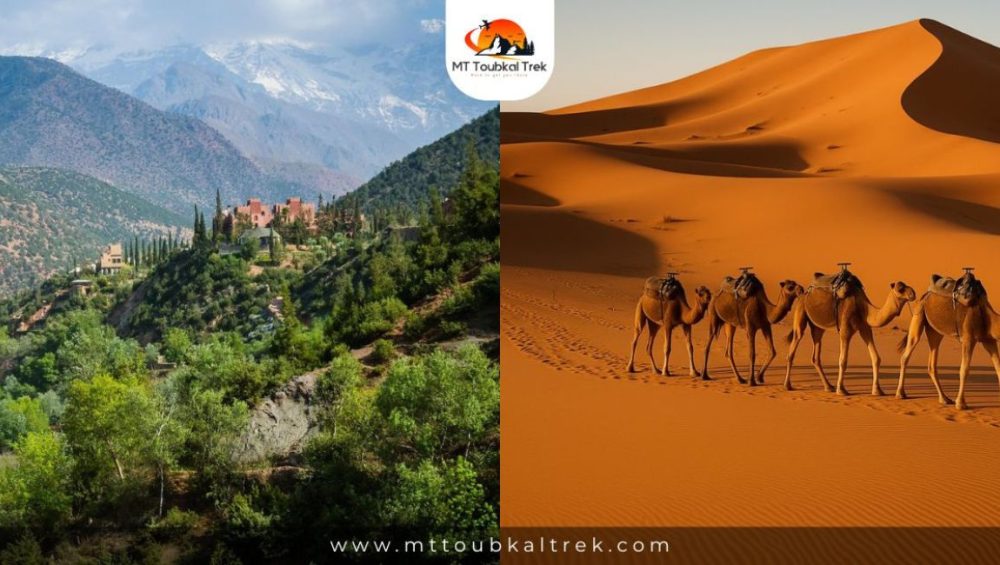
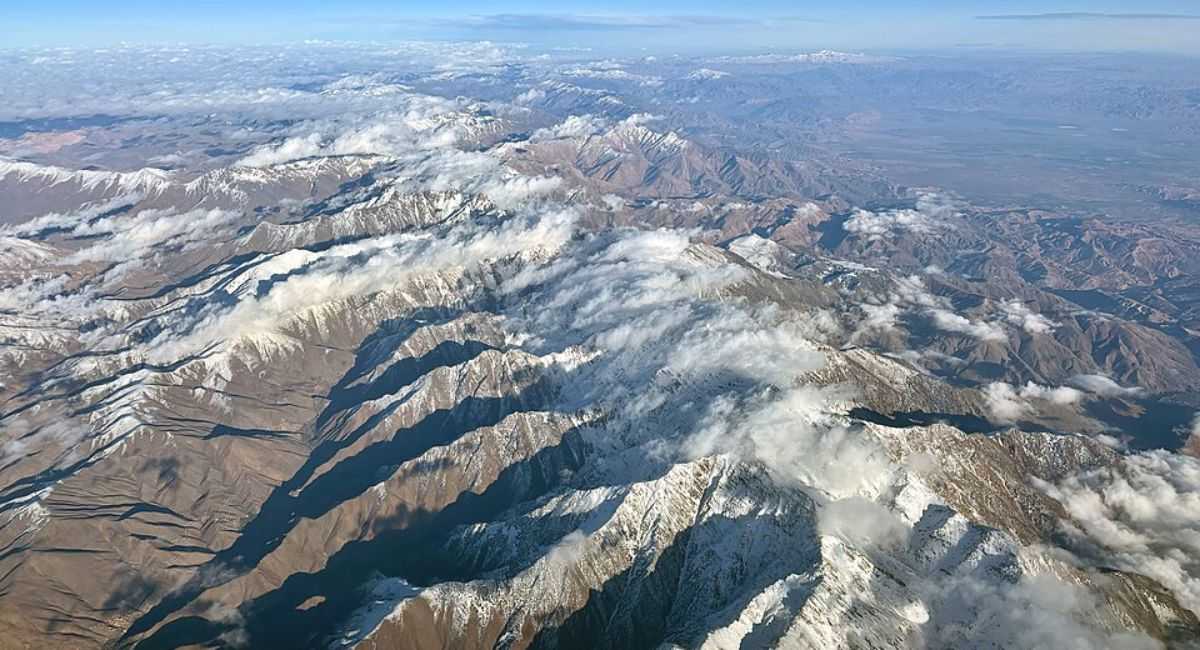
When comparing the Atlas Mountains vs Sahara Desert, the differences become immediately clear. The Atlas Mountains are the kind of place that reward the people willing to work for it. There’s real altitude here — Jebel Toubkal sits at 4,167 metres, the highest peak in North Africa — and the landscapes shift dramatically as you gain elevation. Berber villages clinging to hillsides, mule tracks winding through gorges, walnut trees and irrigation channels that have been there for centuries. It’s beautiful in a layered, earned way.
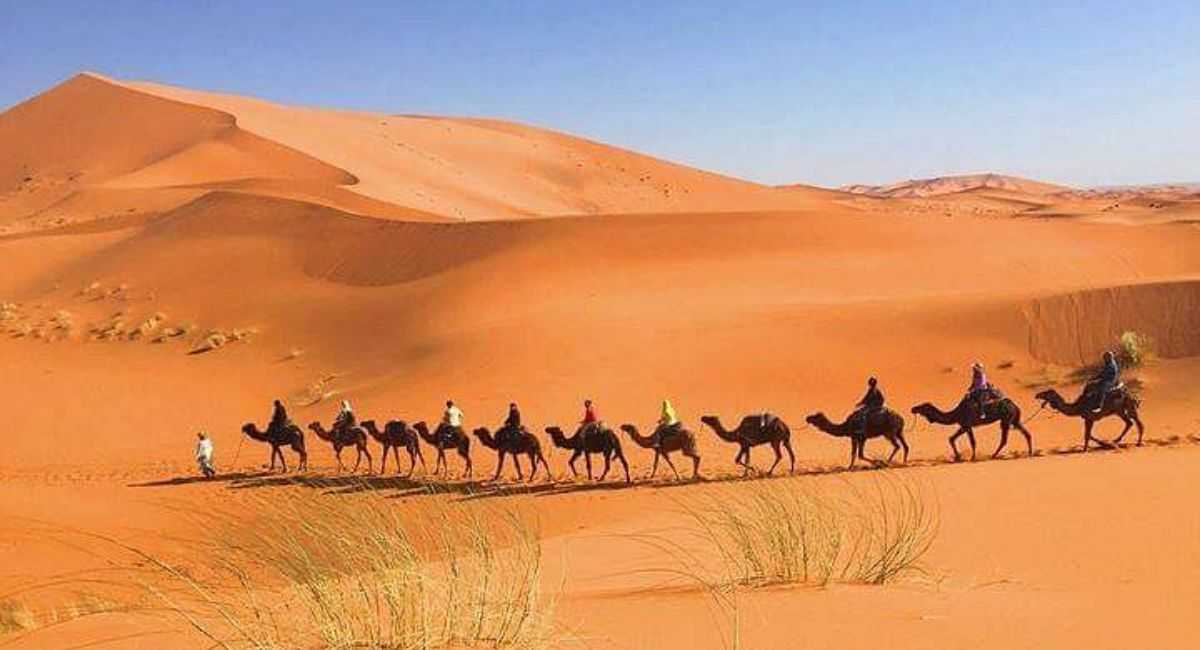
The Sahara Desert around Merzouga is the opposite of earned — it hits you immediately. You round a corner on the road from Rissani and the dunes simply appear: golden, enormous, and exactly as striking as you hoped they would be. The Erg Chebbi dunes reach 150 metres in places. The silence is remarkable. The sunsets are the kind that make people go quiet. And the stargazing, on clear nights, is genuinely one of the more profound experiences Morocco has to offer.
| “The Atlas Mountains ask something of you. The Sahara gives freely. Both leave marks that are hard to shake.” |
Scenery & Landscape
In the Atlas Mountains vs Sahara Desert debate, scenery is perhaps the hardest category to call — both are extraordinary, just in entirely different registers.
| 🏔 Atlas Mountains
→ Dramatic peaks, ridgelines and gorges → Lush valleys and terraced farmland → Traditional Berber kasbahs & villages → Snow-capped summits in winter → Varied terrain — waterfall, plateau, cliff → Todra and Dadès Gorge landscapes |
🏜 Sahara Desert
→ Vast orange sand dunes up to 150m high → Flat desert plateaux and fossil fields → Dramatic sunrise and sunset light → Uninterrupted Milky Way on clear nights → Oasis villages and ksar ruins → Alien, almost lunar daytime landscapes |
The Atlas gives you variety — gorges, valleys, high plateaux, rocky riverbeds, almond groves. The Sahara gives you scale and a quality of light that photographers specifically chase. If variety and drama are your priority, the High Atlas wins on sheer range. If singular, overwhelming beauty is what you’re after, the Sahara is hard to beat. Scenery: Draw.
Activities & Experiences
This is where the two destinations diverge most clearly — and where most people will naturally find themselves gravitating toward one or the other.
Atlas Mountains Activities
The Atlas is fundamentally an active destination. The headlining experience is trekking — from short day walks out of Imlil village to multi-day summit attempts on Toubkal. There’s rock climbing, mountain biking, mule trekking through Berber villages, and gorge walks that are genuinely spectacular. Our complete Atlas Mountains hiking guide covers the specific routes and difficulty levels.
Sahara Desert Activities
The Sahara is more atmospheric than physically demanding. A camel trek at sunset into the dunes is the quintessential experience, and it lives up. Sandboarding, 4×4 desert excursions, dune climbing at sunrise, overnight camps with live Gnawa music, and world-class stargazing. The Morocco camel trek experience is genuinely hard to replicate anywhere else in the world.
In the Atlas Mountains vs Sahara Desert comparison, activities are where the differences are most obvious.
| 🏔 Atlas Activities
→ Multi-day trekking & summit climbing → Toubkal summit (4,167m) → Berber village visits & homestays → Rock climbing and canyon walks → Mountain biking → Waterfall hikes (Ouzoud, Ourika) |
🏜 Sahara Activities
→ Camel trekking at sunset → Overnight desert camp experience → Sandboarding on the dunes → 4×4 desert excursions → Stargazing (world-class) → Dune sunrise hikes |
Activities verdict: Active adventure travellers lean Atlas. Experience-seekers and families lean Sahara. Photographers lean Sahara. Trekkers and hikers lean Atlas. There’s genuinely no wrong answer here.
Physical Difficulty
This is one of the clearest differentiators in the Atlas Mountains vs Sahara Desert comparison.
The Atlas Mountains range from accessible to genuinely demanding. A day walk from Imlil is manageable for most reasonably fit people. The Toubkal day trek is strenuous. The full Toubkal multi-day trek involves altitude, scree, and genuine mountain conditions. The M’Goun trek — Morocco’s second-highest peak — is a multi-day undertaking for people who know what they’re doing at altitude.
The Sahara Desert, by contrast, is accessible to almost everyone. A Morocco desert tour to Merzouga doesn’t require any particular fitness. Camel riding requires nothing more than the willingness to sit on a camel. The challenge in the desert is environmental — heat, sun, dehydration — rather than physical exertion.
| Bottom line: If fitness or mobility is a consideration, the Sahara Desert is significantly more accessible. If you want to be physically challenged and come home having earned something, the Atlas Mountains deliver that in a way the desert simply doesn’t. |
Atlas Mountains vs Sahara Desert: Best Time to Visit
Timing matters in both destinations, and it matters differently. Our guide on the best time to travel in Morocco covers this in more detail, but here are the essentials:
| 🏔 Atlas Mountains — Best Times
→ Spring (Apr–May): Wildflowers, ideal temperatures → Autumn (Sep–Nov): Clear skies, cool air, fewer crowds → Winter (Dec–Feb): Snow trekking, dramatic scenery → Summer (Jun–Aug): Hot in valleys, cooler at altitude |
🏜 Sahara Desert — Best Times
→ Oct–Dec: Best overall — cool, clear, stunning light → Jan–Mar: Cold nights, brilliant stargazing, peak season → Apr–May: Warming up, still manageable, some wind → Jun–Sep: Extreme heat (45°C+), not recommended |
There’s a useful overlap — roughly October to November and again in March to April, both destinations are at or near their best simultaneously. If you’re planning to do both, that’s the window to target.
Cost & Logistics
In the Atlas Mountains vs Sahara Desert comparison, cost and logistics play a major role, with the Atlas being far more accessible and budget-friendly, while the Sahara requires more time, planning, and travel expense
Atlas Mountains: Imlil is just 60 km from Marrakech, about 90 minutes by car. Day trips from Marrakech to the Atlas are genuinely practical. A guided day trek runs roughly €40–€80 per person; a full multi-day Toubkal circuit is typically €200–€400 per person.
Sahara Desert: Merzouga is around 550 km from Marrakech — a long drive, usually 8–10 hours. Either an overnight bus, private driver, or a 3-day Marrakech to Merzouga tour that builds the journey into the experience. Desert camps range from basic (€30–€70) to luxury glamping (€100–€250). The route itself, through the Draa Valley and past Ksar Ait Ben Haddou, is worth it.
Cost verdict: Atlas Mountains win on accessibility and budget. The Sahara requires more commitment in time and cost — but delivers a proportionally larger experience for many travellers.
Who Is Each Destination For?
The Atlas Mountains vs Sahara Desert choice often comes down to your travel style.
| 🏔 Choose the Atlas if you…
→ Love hiking, trekking, or climbing → Want to summit Toubkal (4,167m) → Interested in Berber culture and village life → Prefer cooler temperatures and mountain scenery → Have limited time based in Marrakech → Want a physically challenging adventure |
🏜 Choose the Sahara if you…
→ Want the iconic Morocco desert experience → Dream of sleeping under Saharan stars → Love photography (sunrise / sunset / stars) → Travelling with mixed fitness levels → Want something genuinely unlike anywhere else → Are a first-time visitor seeking a bucket-list moment |
Head-to-Head Scorecard
Here’s where the Atlas Mountains vs Sahara Desert comparison lands across all key categories:
| Category | 🏔 Atlas Mountains | 🏜 Sahara Desert |
| Scenery | Varied & dramatic | Iconic & overwhelming |
| Activities | ★ Wider range | More atmospheric |
| Accessibility | ★ 60 km from Marrakech | 550 km, 8–10 hrs |
| Physical Demand | Moderate to very high | ★ Low — anyone can do it |
| Photography | Outstanding | Outstanding |
| Stargazing | Good at altitude | ★ World-class |
| Culture | ★ Rich Berber heritage | Nomadic desert culture |
| Budget | ★ More affordable | Higher travel cost |
| Uniqueness | Beautiful & memorable | ★ Bucket-list level |
| Best Season | Spring & Autumn | Oct – Apr |
| Overall Verdict
The Atlas Mountains win on accessibility, activity range, and cultural depth. The Sahara Desert wins on sheer iconic experience, stargazing, and universal accessibility regardless of fitness. Neither is objectively better — but for most first-time Morocco visitors choosing just one, the Sahara edges it on the ‘unforgettable, unlike-anything-else’ factor. For active travellers or those based in Marrakech with limited time, the Atlas is the stronger choice. |
Should You Just Do Both?
This is genuinely what most people conclude — and honestly, it’s the right answer if you have the time. A well-designed Morocco itinerary can combine both destinations without feeling rushed, and the contrast between them makes each one more powerful. Coming down from the Atlas into the Saharan flatlands is a landscape shift that stays with you.
A popular circuit that MT Toubkal Trek runs is: Marrakech → Atlas Mountains → Ouarzazate → Ksar Ait Ben Haddou → Draa Valley → Merzouga dunes → Fes. In 8–10 days, this covers both landscapes along with Morocco’s most dramatic connecting scenery. Our Marrakech to Merzouga tour and Atlas Mountains trekking options can be combined — just get in touch and we’ll build the route around your timeline.
If you have fewer than 5 days, choose one and commit fully — trying to squeeze both into a short trip usually means doing neither properly. In that case, our best places in Morocco guide might help you prioritise based on your specific interests.
KEY TAKEAWAYS
| 1 | Atlas Mountains vs Sahara Desert has no single right answer — both are extraordinary, just in completely different ways. Your travel style determines the choice. |
| 2 | Choose the Atlas Mountains for physical challenge, trekking, Berber culture, and a destination close to Marrakech. |
| 3 | Choose the Sahara Desert for an iconic bucket-list experience, world-class stargazing, and accessibility for all fitness levels. |
| 4 | The Atlas Mountains are just 60 km from Marrakech. The Sahara requires 550 km of travel and at least 3 dedicated days. |
| 5 | The best window to visit both simultaneously is October–November or March–April, when both destinations are near their peak. |
| 6 | With 8–10 days, you can comfortably experience both as part of a southern Morocco circuit through Ouarzazate, the Draa Valley, and Merzouga. |
| 7 | For first-time visitors choosing just one, the Sahara edges it on sheer impact. For active travellers with limited time, the Atlas wins. |
Frequently Asked Questions
Can I visit both the Atlas Mountains and the Sahara Desert in one trip?
Yes — and many people do. A 7–10 day Morocco itinerary can comfortably include both. A typical route runs Marrakech, through the Atlas, then east through the Draa Valley to Merzouga, and back via Fes. The journey between them — passing Ouarzazate, Ksar Ait Ben Haddou, and the Dadès Gorge — is part of the experience.
Which is better for first-time visitors to Morocco?
The Sahara Desert tends to be the crowd favourite for first-timers — the camel trek and overnight camp is genuinely unlike anything else, and requires no particular fitness. The Atlas Mountains are closer to Marrakech and offer more flexibility. Ideally, plan for both. If you must choose one, most first-time visitors leave the Sahara more awestruck.
Is the Atlas Mountains or the Sahara Desert more physically demanding?
The Atlas Mountains are significantly more demanding — particularly trekking to Jebel Toubkal (4,167m), which requires good fitness and proper mountain gear. The Sahara is accessible to almost everyone; a camel ride and overnight camp requires no special fitness beyond sensible clothing and sun protection.
Which destination is better for photography?
Both are exceptional and genuinely different. The Sahara offers extraordinary golden light at sunrise and sunset over the dunes, plus world-class stargazing. The Atlas offers dramatic gorges, ancient kasbahs, Berber village scenes, and mountain landscapes. Most photographers rate both highly — for completely different reasons.
How long do I need to visit the Sahara Desert from Marrakech?
A minimum of 3 days is needed to reach Merzouga from Marrakech and spend one night in the dunes. Most people doing a desert circuit spend 4–5 days. Our 3-day Marrakech to Merzouga tour is the most popular option for those with limited time.
Conclusion
The Atlas Mountains vs Sahara Desert comparison ultimately comes down to a simple question: what kind of traveller are you? If you want to work for your views and push your limits, the Atlas Mountains will reward you in ways that are hard to articulate until you’re standing at the top of Jebel Toubkal with the whole of North Africa beneath you. If you want to be swept away by something immense and beautiful without needing to earn it through sweat and altitude, the Sahara Desert will deliver that, and then some.
Most people, when they think about it honestly, want both. And that’s completely reasonable — Morocco is one of the few countries where you can go from 4,000-metre mountain peaks to vast Saharan sand dunes within a single road trip. The landscapes in between — Ksar Ait Ben Haddou, the Draa Valley, the Dadès Gorge — are hardly consolation prizes either. In the end, the Atlas Mountains vs Sahara Desert decision depends entirely on what kind of experience you want.
If you’re still deciding — or you’ve decided you want both — MT Toubkal Trek has been running guided tours across both destinations for years. Whether it’s an Atlas Mountains trek, a Morocco desert tour, or a full southern circuit combining both, we’ll put something together that fits your time, budget, and ambitions. Just get in touch.
Morocco is waiting. Both halves of it.