Every year, people arrive in Imlil assuming the Atlas Mountains will be a pleasant, scenic walk — and a fair number of them turn around halfway up, underprepared and genuinely surprised by how demanding it gets. This isn’t meant to scare you off. It’s meant to make sure you’re in the group that summits, enjoys it, and comes back wanting to do it again.
These Atlas Mountains trekking tips are built from what actually trips people up — not generic ‘bring water and sunscreen’ advice, but the specific things that separate a trek that goes well from one that doesn’t. Whether you’re aiming for a gentle day walk or the full Toubkal summit, this guide covers what genuinely matters.
Why Preparation Actually Matters Here
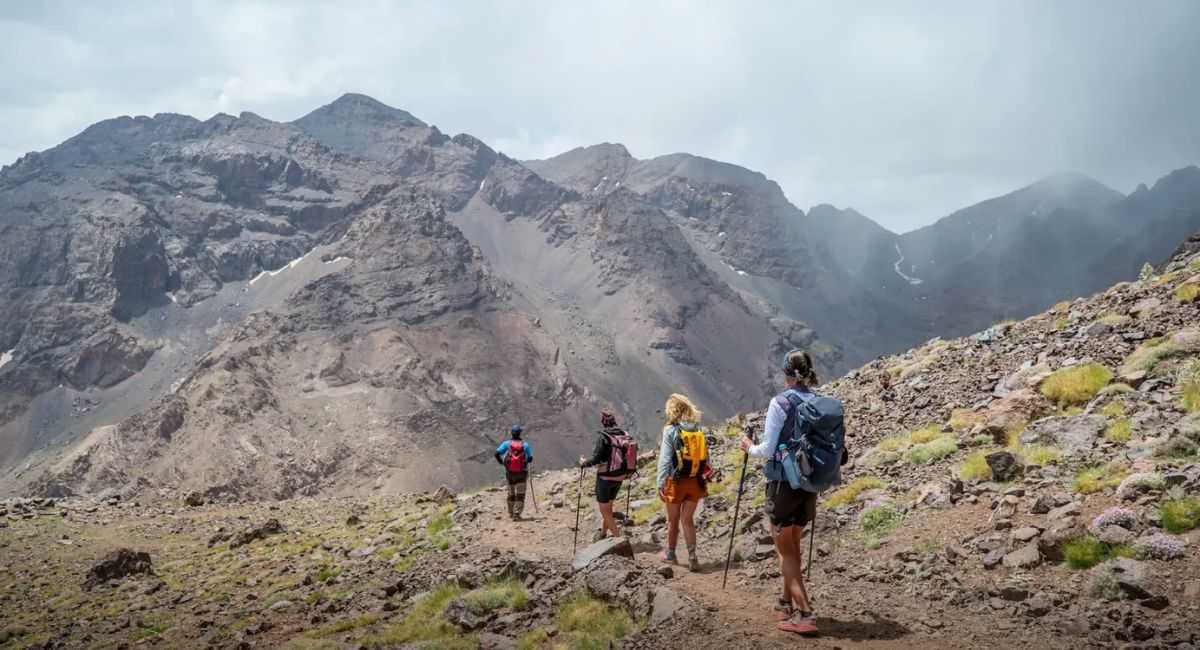
The High Atlas isn’t a casual walk in a national park back home. Jebel Toubkal — North Africa’s highest peak — sits at 4,167 metres, and even shorter routes near Imlil involve steep, uneven mule tracks, loose scree, and rapid weather changes. The altitude alone changes how your body performs, even on routes that look modest on a map.
None of that should put you off. Thousands of people with no mountaineering background successfully trek and summit here every year. The difference between a trek that goes smoothly and one that becomes miserable usually comes down to preparation — fitness, gear, timing, and a realistic understanding of what you’re taking on. That’s what this guide covers.
| “The mountain doesn’t care how fit you were last year. It cares how prepared you are this week.” |
8 Essential Atlas Mountains Trekking Tips
| 1. Build the Right Kind of Fitness |
| General gym fitness doesn’t translate directly to mountain trekking. What actually matters is sustained cardiovascular endurance combined with leg strength for repeated ascent and descent — very different from running fitness or weightlifting strength.
If you’re aiming for a day trek around Imlil, moderate regular activity for a few weeks beforehand is generally sufficient. If you’re targeting the Toubkal day trek or a multi-day Toubkal trek, you should be comfortably able to hike 6–8 hours over consecutive days while carrying a daypack. ✓ Cardio training (hiking, running, cycling) 3x weekly for 6–8 weeks before your trek ✓ Stair climbing or hill walks with a loaded pack to simulate ascent conditions ✓ Leg strength work — squats, lunges — to protect your knees on long descents ✓ At least one multi-hour practice hike in the weeks before you travel |
| 2. Choose the Right Route for Your Level |
| One of the most common mistakes is choosing a route based on what looks impressive rather than what matches your actual fitness and experience. The Atlas offers a genuine range, and being honest about where you sit on that range makes a huge difference to how much you enjoy the trek. |
| Easy
Day walks from Imlil through Berber villages. A few hours, gentle gradient, suitable for most fitness levels. |
Moderate
The Toubkal 2-day trek. Long ascent day, refuge overnight, requires decent fitness. |
| Challenging
Full Toubkal 3-day trek or summit attempts. Altitude, scree, real mountain conditions. |
Advanced
The M’Goun trek — Morocco’s second-highest peak, multi-day, remote terrain. |
If in doubt, start with a shorter route and build up. Our complete Atlas Mountains hiking guide breaks down specific routes by difficulty in more depth.
| 3. Pack the Right Gear |
| Gear mistakes are avoidable, and they’re one of the most common reasons treks become unpleasant. The Atlas has genuine temperature swings — hot at midday, freezing at altitude overnight — so layering is essential, not optional.
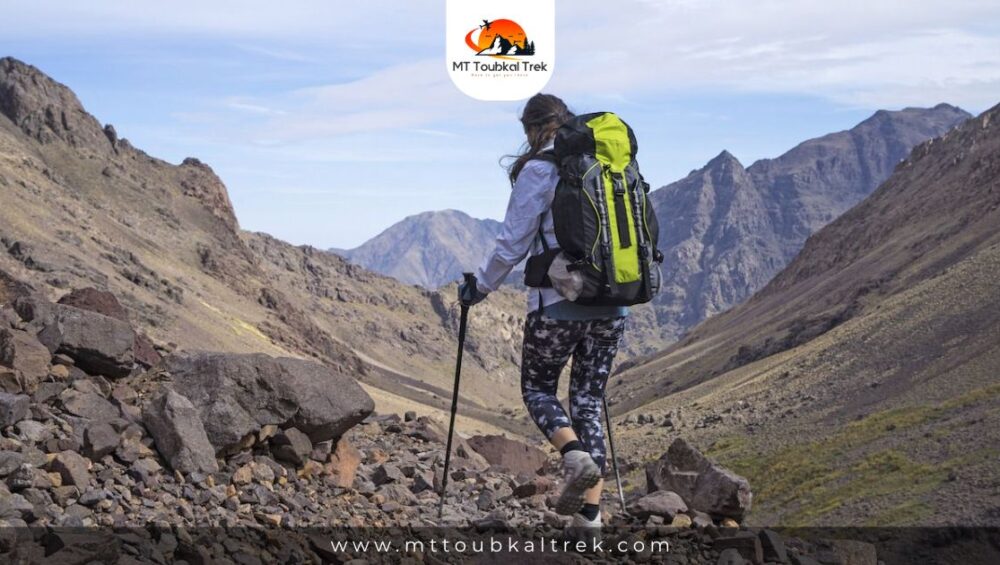
✓ Broken-in hiking boots with ankle support — never wear new boots on a trek ✓ Layered clothing system: moisture-wicking base, insulating mid-layer, waterproof shell ✓ Warm hat and gloves — even in spring and autumn, summit mornings are cold ✓ Trekking poles — genuinely useful on steep scree descents ✓ Headlamp — summit attempts often start before dawn ✓ Sleeping bag liner if staying at mountain refuges (bedding is basic) ✓ Sunscreen and sunglasses — UV exposure at altitude is significantly higher |
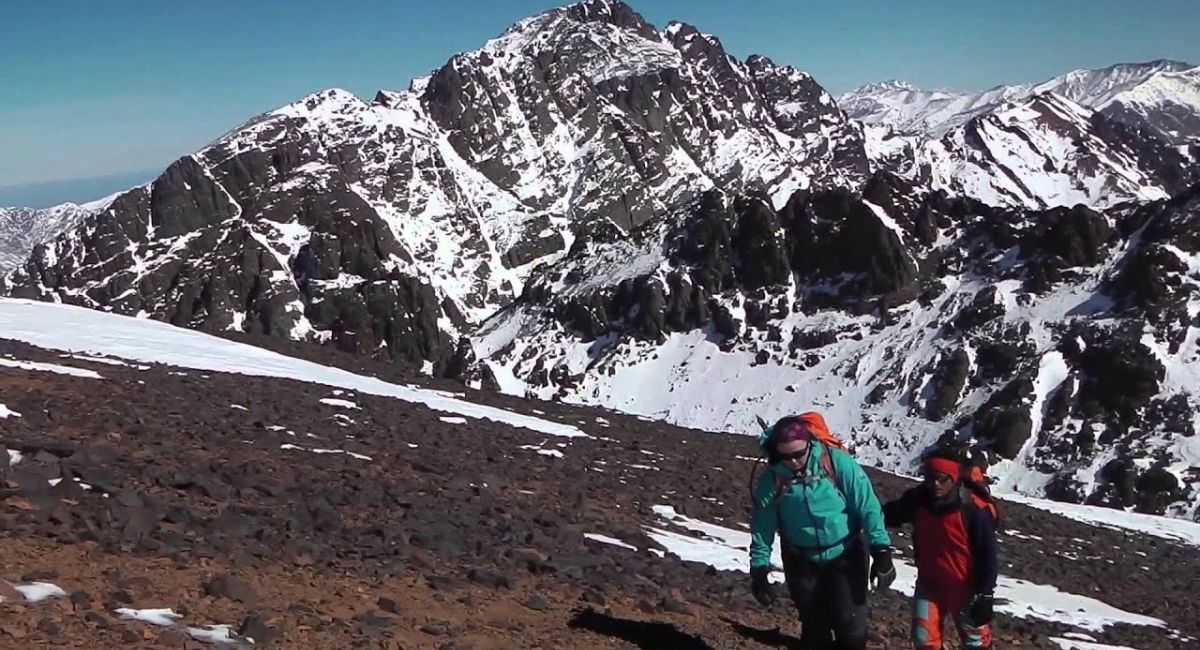
| Gear tip: Crampons and an ice axe are required for Toubkal in winter conditions (roughly December to April, depending on snowfall) — and you need to know how to use them. If you don’t have winter mountaineering experience, trek with a guide who can assess conditions and provide or arrange equipment. |
| 4. Understand Altitude & Acclimatisation |
| Toubkal’s 4,167-metre summit is high enough that altitude sickness is a genuine possibility, even for fit, experienced trekkers. This isn’t about fitness level — it’s about how your individual body responds to reduced oxygen, and it’s largely unpredictable until you’re actually there.
The standard Toubkal itinerary builds in a night at the Toubkal Refuge (around 3,207m) before the summit push, which gives your body some time to adjust. Rushing this significantly increases your risk of altitude-related problems. ✓ Ascend gradually — don’t rush the elevation gain on day one ✓ Stay well hydrated — dehydration worsens altitude symptoms significantly ✓ Recognise the warning signs: persistent headache, nausea, dizziness, breathlessness at rest ✓ Descend immediately if symptoms become severe — pushing through doesn’t help |
| ⚠ Important: Mild headache or fatigue at altitude is common and usually manageable. Severe headache, vomiting, confusion, or difficulty breathing at rest are signs of serious altitude sickness and require immediate descent — don’t try to push through these symptoms to reach the summit. |
| 5. Decide on a Guide |
| For Toubkal and other routes within Morocco’s national park system, a licensed local guide is a legal requirement — not optional. This isn’t bureaucracy for its own sake; the terrain, weather, and navigation challenges are genuinely significant, and local guides know the mountain in ways that aren’t replaceable by GPS apps.
For shorter day walks immediately around Imlil, a guide isn’t always mandatory, but we’d still recommend one — for navigation, cultural context, and the genuine value of local knowledge about Berber village life and the history of the trails. At MT Toubkal Trek, we work exclusively with licensed local mountain guides who know these routes intimately — many have summited Toubkal hundreds of times and grew up in villages along the trail. |
| 6. Time Your Trek Correctly |
| Season changes the entire character of an Atlas Mountains trek — not just the temperature, but the technical requirements. Our guide on the best time to travel in Morocco covers this for the country broadly, but here’s what matters specifically for trekking. |
| April – May
Excellent window. Wildflowers, manageable snow at altitude, stable weather. One of the best times to trek. |
June – August
Hot in the valleys but pleasant at altitude. Busiest season. Start hikes early to avoid midday heat. |
| September – November
Excellent window. Clear skies, cooling temperatures, fewer crowds. Many consider this the best season overall. |
December – March
Winter conditions on Toubkal. Requires crampons, ice axe, and winter mountaineering experience — or a guide equipped for it. |
| 7. Prepare Mentally, Not Just Physically |
| This gets overlooked constantly, and it shouldn’t. Trekking at altitude, over consecutive long days, in unfamiliar terrain, is mentally demanding in ways that gym training doesn’t prepare you for. Boredom, discomfort, fatigue, and moments of genuinely wondering why you’re doing this are all completely normal — and they pass.
The people who struggle most aren’t usually the least fit — they’re the ones who expected the experience to feel effortless and weren’t ready for the parts that are simply hard. Going in with realistic expectations and mental flexibility makes an enormous difference to how the whole experience feels. |
| 8. Know the Safety Basics |
| None of this is meant to be alarming — thousands of people trek the Atlas safely every year — but a few safety fundamentals are worth internalising before you go.
✓ Travel insurance that explicitly covers trekking at altitude — standard policies sometimes exclude this ✓ Tell someone your planned route and expected return time ✓ Carry more water than you think you need, plus a basic first aid kit ✓ Check weather conditions before summit days — mountain weather changes quickly ✓ Be willing to turn back — the summit will still be there next time |
KEY TAKEAWAYS
| 1 | The most important Atlas Mountains trekking tips centre on honest fitness assessment, the right gear, and gradual altitude acclimatisation — not raw athleticism. |
| 2 | Choose a route that matches your actual experience level, not the one that looks most impressive. The Atlas offers a genuine range from easy day walks to serious mountaineering. |
| 3 | Layered clothing, broken-in boots, and a headlamp are non-negotiable — temperature swings between midday and summit mornings are extreme. |
| 4 | Altitude sickness can affect anyone regardless of fitness. Ascend gradually, stay hydrated, and descend immediately if symptoms become severe. |
| 5 | A licensed guide is legally required for Toubkal and recommended for almost every other route — local knowledge genuinely matters here. |
| 6 | April–May and September–November are the best trekking windows. Winter requires technical mountaineering gear and experience. |
| 7 | Mental preparation matters as much as physical preparation — go in with realistic expectations and the flexibility to adjust your plans. |
Frequently Asked Questions
How fit do I need to be for Atlas Mountains trekking?
For day treks around Imlil, moderate fitness is enough — regular walkers and casual hikers manage these comfortably. For the Toubkal summit, you should be able to comfortably hike 6–8 hours over consecutive days while carrying a day pack. Regular cardio training and some hill walking for 6–8 weeks beforehand makes a real difference to how enjoyable the trek feels.
Do I need a guide to trek in the Atlas Mountains?
For Toubkal and other high-altitude routes within Morocco’s national park system, a licensed guide is legally required. For shorter day walks near Imlil, a guide isn’t mandatory but is strongly recommended for navigation, safety, and the cultural context local guides provide about Berber village life along the trails.
What is the best time of year to trek the Atlas Mountains?
April to May and September to November are the best windows — stable weather, manageable temperatures, and trails generally clear of snow. June to August is hot in the valleys, but doable, especially at altitude. December to March requires winter mountaineering experience and proper equipment (crampons, ice axe) for Toubkal specifically.
How do I deal with altitude on the Toubkal trek?
Toubkal’s summit sits at 4,167m, high enough for altitude sickness to be a genuine possibility regardless of fitness level. The standard approach is to ascend gradually, spend a night at the Toubkal Refuge (around 3,207m) before summiting, stay well hydrated, and descend immediately if you experience severe headache, nausea, dizziness, or breathlessness at rest.
What should I do if I’m not an experienced hiker but want to try Toubkal?
Start with a shorter day trek near Imlil first to gauge your fitness and comfort with mountain terrain. If that goes well, build toward the full Toubkal trek with a few months of consistent cardio and hill training beforehand. A guided multi-day itinerary that includes a refuge night for acclimatisation is the safest approach for first-time high-altitude trekkers.
Conclusion
Good preparation doesn’t guarantee an easy trek — the Atlas Mountains are demanding by nature, and that’s exactly why people find the experience so rewarding. What good preparation does is stack the odds in your favour: it means your body can handle the climb, your gear keeps you warm and dry when conditions shift, and you recognise the difference between normal discomfort and a genuine problem before it becomes dangerous.
These Atlas Mountains trekking tips aren’t about turning you into a mountaineer overnight. They’re about making sure the months of anticipation leading up to your trip translate into an experience that lives up to it — rather than one cut short by a blister you should have prevented, or a summit attempt that should have been a slower, two-day approach instead of one rushed day.
If you’d like expert guidance putting this all together — choosing the right route for your fitness, timing it for the best season, and trekking with a licensed local guide who knows the mountain — MT Toubkal Trek has been organising Atlas Mountains treks for years. Whether it’s a gentle day walk from Imlil or the full Toubkal summit experience, get in touch and we’ll help you prepare properly.
The mountain will be there. Make sure you’re ready for it.