Packing for a Morocco desert tour is one of those things that sounds straightforward until you’re standing at the base of a 150-metre sand dune at noon, realising you forgot sunscreen, your shoes are filling with sand, and you left your scarf in the hotel in Marrakech. This Morocco desert packing list exists so that doesn’t happen to you.
Overpacking is just as much of a problem as underpacking here. You’ll be on camels, in 4x4s, and sometimes carrying a daypack through loose sand. Weight matters. So does practicality. What’s below is based on actual experience of what works in the Sahara — not just a generic travel checklist with a Morocco label on it.
Why Your Packing List Actually Matters for a Morocco Desert Tour
The Merzouga desert and the broader Saharan region around it are genuinely remote. Once you’re on a camel trek heading into the dunes, or settled into a desert camp for the night, you can’t pop out to a pharmacy or a sports shop. The nearest proper town with an ATM is Rissani, about 20 km from Merzouga. This isn’t meant to scare you — it’s just context for why this Morocco desert packing list is worth taking seriously.
The conditions you’ll face are also genuinely varied. Days can be hot enough to burn in minutes. Nights from October to March can drop close to freezing. Wind picks up without warning and carries sand into everything. A well-thought-out Morocco desert packing list accounts for all of that — not just the Instagram version of the Sahara.
| “The desert doesn’t care what you forgot. Pack smart before you leave — you won’t get a second chance once you’re in the dunes.” |
Clothing — What to Wear in the Morocco Desert
Clothing is where most people either get it right or get it very wrong. The instinct is to pack light summer clothes because — desert, hot, obviously. But the reality is more complicated, and your choices will directly affect how comfortable your Morocco desert tour is.
| Clothing Essentials |
| ✓ Lightweight long-sleeved shirts (2–3)
Linen or moisture-wicking fabric. Long sleeves protect from sun and sand — not just for warmth. |
| ✓ Loose-fit trousers (2 pairs)
Light cotton or linen. Avoid tight jeans — uncomfortable on camels, and they trap heat badly. |
| ✓ T-shirts/vest tops (2–3)
For wearing under long sleeves or at camp in the evenings. |
| ✓ Warm mid-layer — fleece or light jacket
Non-negotiable October to March. Desert nights near Merzouga can drop to 3–5°C. |
| ✓ Warmer outer layer for winter visits
December to February specifically — a proper down jacket is worth the bag space. |
| ✓ Underwear (3–4 pairs, moisture-wicking)
Merino wool or synthetic. Cotton stays damp and uncomfortable in heat. |
| ✓ Lightweight socks (3–4 pairs)
Merino wool recommended — good in both heat and cold, and resists odour. |
| ✓ Swimwear
Some desert camps and riads have pools. Worth including. |
| ✓ Large cotton scarf or keffiyeh
Perhaps the single most important item on this list. Sun protection, sand filter, wind shield, and extra warmth all in one. |
| 💡 Colour tip: Light colours reflect heat. Avoid black and dark colours in summer — they absorb heat and you’ll feel it. In winter, darker layers for warmth are fine. |
Footwear — Getting This Right Matters More Than You Think
Footwear is a surprisingly contentious topic in desert travel. You need at least two pairs, serving different purposes.
| 👟 Footwear Essentials |
| ✓ Closed-toe shoes or low hiking boots
For dune climbing, 4×4 excursions, and walking on rocky terrain. Good ankle support is a bonus. |
| ✓ Sandals or flip-flops
For camp use only — relaxing, washing up, evening meals, not for climbing dunes. |
| ✓ Thin liner socks
Helps prevent blisters inside hiking shoes on sandy surfaces. |
A word on sandals for dune climbing — people try it, it looks nice in photos, and it is genuinely not worth it. Loose sand on a steep dune turns a 10-minute climb into a 30-minute ordeal. Closed shoes make a real difference. Ask anyone who’s done it both ways.
Sun & Sand Protection
Sun protection in the Sahara isn’t optional — it’s medical. The UV index is high year-round, and the reflective surface of sand intensifies it further. This section of the Morocco desert packing list is the one to take most seriously.
| ☀️ Sun & Sand Protection |
| ✓ High-SPF sunscreen (SPF 50+)
Bring more than you think you need. It’s expensive and hard to find in Merzouga. |
| ✓ Lip balm with SPF
Dry desert air and sun combine to crack lips fast — a small thing that makes a big difference. |
| ✓ Sunglasses (wraparound or polarised)
Essential. Sand glare is intense, and wind blows grit directly at your eyes. |
| ✓ Wide-brim hat or desert cap
For direct sun exposure between activities. A keffiyeh covers this too but a hat provides structure. |
| ✓ Large scarf/keffiyeh
Already on the clothing list — it does double duty as the best sand-protection tool available. |
| ✓ Dust/sand goggles (optional)
Overkill for most, but useful for 4×4 dune bashing or sandstorm season. |
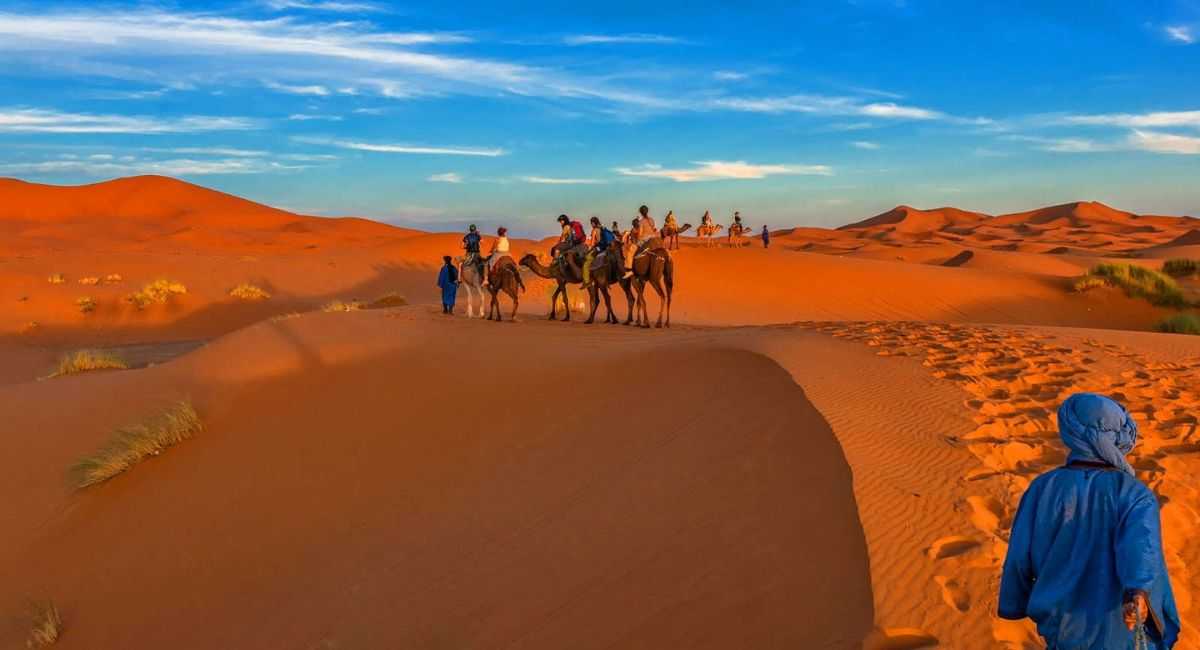
Bags, Gear & Electronics
The general rule with electronics in the desert: less is more, and whatever you bring needs to be protected from sand. Fine Saharan sand gets into lens mounts, charging ports, headphone jacks, and zippers. Plan for it.
| 🎒 Bags & Gear |
| ✓ Main luggage (soft-sided preferred)
Hard-sided suitcases are awkward on camel packs and 4×4 roof racks. A 40–60L duffel works better. |
| ✓ Small daypack (20–25L)
For dune hikes, day excursions, and keeping essentials close. |
| ✓ Sealed zip-lock bags (several)
Store phone, passport, camera, and all electronics inside these. Non-negotiable. |
| ✓ Camera (with sand protection)
If serious about photography, bring a protective sleeve. A mirrorless body is more sand-resistant than DSLR. |
| ✓ Power bank (large capacity, 20,000mAh)
Camps may not have reliable power. Keeps phone and camera going for multiple days. |
| ✓ Universal travel adapter (Type C/E)
Morocco uses European-style sockets. European adapters work fine. |
| ✓ Headlamp or small torch
Desert camps can be very dark at night. A headlamp is more useful than a phone torch. |
| ✓ Reusable water bottle (1L minimum)
Hydration in the desert is not optional. 1.5L is better for active days. |
| ✓ Lightweight sleeping bag liner (Oct–Mar)
Camps provide blankets, but a liner adds meaningful warmth in winter. |
| 💡 Sand protection tip: Put your phone in a zip-lock bag before getting on the camel. You can still use the touchscreen through the plastic. Sand that gets into a charging port is much harder to deal with than you’d expect. |
Toiletries & Health Essentials
Keep this section minimal and practical. Desert environments are harsh on skin and sinuses, but you don’t need a full bathroom kit — most camps provide basic soap and water.
| 🧴 Toiletries & Health |
| ✓ Moisturiser (face and body)
Dry desert air dehydrates skin fast. Use morning and evening. |
| ✓ Hand sanitiser
Water access at camps can be limited. Essential before meals. |
| ✓ Wet wipes / biodegradable wipes
For quick cleanups when shower water isn’t available. |
| ✓ Imodium / anti-diarrhoeal tablets
Food in Moroccan camps is generally good, but stomach issues are common in new food environments. |
| ✓ Antihistamines
Desert dust and pollen can trigger reactions even in people without known allergies. |
| ✓ Basic first aid kit
Plasters, blister pads, antiseptic wipes, and pain relief. Small but important. |
| ✓ Eye drops
Sandy wind irritates the eyes even with glasses. Saline drops provide quick relief. |
| ✓ Prescription medication (if applicable)
Bring enough for your full trip plus a few extra days. No pharmacies near the dunes. |
| ✓ Toothbrush, toothpaste, basic wash kit
Standard travel-size versions. Camps have limited water — keep it simple. |
Documents, Money & Practical Items
Getting caught without cash 20 km from the nearest ATM is a stressful experience that’s entirely avoidable. If you’re joining a Sahara tour from Marrakech, your operator will brief you — but it’s worth sorting regardless.
| 📄 Documents & Money |
| ✓ Passport (valid 6+ months)
Keep in your sealed zip-lock bag along with your electronics. |
| ✓ Moroccan Dirhams (MAD) — sufficient cash
Withdraw before leaving Marrakech or Fes. The nearest ATM to Merzouga is in Rissani, ~20 km away. |
| ✓ Travel insurance documents
Including emergency contact numbers. Screenshot or print a copy. |
| ✓ Tour booking confirmation
Screenshot or printed copy. WhatsApp messages aren’t always accessible offline. |
| ✓ Emergency contacts (written down)
Phone batteries die. Keep key numbers on paper. |
| ✓ Offline maps downloaded
Google Maps or Maps.me is offline for the Merzouga / Rissani area. Signal gets patchy in the dunes. |
| ✓ Small day bag for valuables
Keep passport, cash, and a backup charger close, separately from your main luggage. |
Adjusting Your Morocco Desert Packing List by Season
Same destination, very different packing requirements. For a fuller breakdown, check our guide on the best time to travel in Morocco.
| Spring — Mar to May
Standard list applies. Light layers for evenings. SPF essential. Some wind. Crowds increase from Easter. |
Summer — Jun to Aug
Maximum sun protection. Long sleeves are essential. Large water bottle critical. Activities only at dawn or dusk. |
| Autumn — Sep to Nov
Good transitional window. Warm days, cool evenings. Add a fleece. October onwards: proper warm layer for nights. |
Winter — Dec to Feb
Full cold-weather layers required. A down jacket for nights. Sleeping bag liner strongly recommended. Brilliant stargazing. |
If you’re combining the desert with an Atlas Mountains hike or a Toubkal trek, your packing list will need to account for altitude and lower temperatures in the mountains, too. The transition between mountain and desert environments is one of the things that makes a full Marrakech to Merzouga tour so varied — and worth planning carefully.
What to Leave Behind
An honest Morocco desert packing list has to include what not to bring. Overpacking is a real problem in desert environments — weight on a camel, bulk in a 4×4, items getting damaged. Here’s what consistently isn’t worth bringing:
Heavy jeans and denim: Uncomfortable in heat, slow to dry, and rigid on a camel saddle. Leave them for the cities.
Expensive jewellery: Sand gets into settings, clasps break, and it’s not the environment for it. Leave anything you’d be upset to lose.
Multiple pairs of shoes: Two is enough. More is just weight.
A full toiletry bag: Camps have basic facilities. Be ruthless. You don’t need six skincare products in the Sahara.
Anything delicate or irreplaceable: Leave it at the hotel in Marrakech or your base city. Sand and Saharan sun are not gentle on belongings.
Excess electronics: Your phone camera is good enough for most people. Every extra device is another thing to protect, charge, and worry about.
KEY TAKEAWAYS
| 1 | Morocco desert packing list must account for both extreme heat and cold nights — especially October to March when temperatures drop near freezing. |
| 2 | A large scarf or keffiyeh is the single most versatile item you can pack — sun shield, sand filter, wind protection, and warmth in one. |
| 3 | Bring high-SPF sunscreen from home. It’s difficult to find and expensive in Merzouga. |
| 4 | Sand gets into everything. Use zip-lock bags for your phone, passport, and all electronics. This is not optional. |
| 5 | Bring sufficient Moroccan Dirhams before leaving the city. The nearest ATM to Merzouga is 20 km away in Rissani. |
| 6 | Pack two types of footwear: closed shoes with grip for dune climbing, sandals for camp use only. |
| 7 | Avoid overpacking — you’ll be on camels and in 4x4s. Keep your main bag under 15 kg and your daypack light. |
Frequently Asked Questions
What should I wear in the Moroccan desert?
Loose, lightweight long-sleeved tops and trousers in breathable fabrics. A scarf or keffiyeh is essential for sun and sand protection. Evenings call for warmer layers — a fleece or light jacket at minimum, especially October to March when nights near Merzouga can drop close to freezing.
Can I buy anything I forget in Merzouga?
Basic items like water, snacks, scarves, and simple toiletries are available in Merzouga town. However, specialist gear, quality sunscreen, and electronics accessories are best sourced before you arrive — don’t rely on finding them locally. The town is small, and the stock is limited.
How much cash should I bring to the desert?
Bring enough Moroccan Dirhams to cover your desert camp fee, camel trek, activities, meals, and tips. Most camps and operators don’t accept cards. The nearest ATM is in Rissani, about 20 km from Merzouga — sort your cash in the city before you travel.
Do I need a sleeping bag for the desert?
Camps typically provide blankets. A lightweight sleeping bag liner is worth adding for winter visits (December to February) when desert nights drop near freezing. In spring and autumn, camp blankets are generally sufficient. In summer, a sheet is all you’ll want.
Is this list the same for Erg Chebbi and Erg Chigaga?
Largely yes. Erg Chigaga is more remote, so supply options are even more limited, and the ‘bring everything from the city’ advice applies even more strongly. For both destinations, this Morocco desert packing list covers all the essentials.
Conclusion
Getting your Morocco desert packing list right is genuinely one of the things that separates a comfortable, memorable desert experience from an uncomfortable one. The Sahara is magnificent — but it’s also demanding. The sun is relentless, the sand gets everywhere, the nights can be bitterly cold, and the nearest shop is far away. None of that should put you off. It just means you pack smart before you go.
The items on this list aren’t luxury additions — they’re the practical result of what actually works in that environment. A scarf. A sealed bag for your phone. Enough cash. Sunscreen from home. Closed shoes for the dunes. These things matter more than you’d expect, and you’ll be glad you have them.
If you’re still in the planning stage, our guides on Merzouga, the best time to visit Morocco, and our full Morocco desert tours overview are good next reading. And if you’d like to leave the logistics to someone who knows the route, MT Toubkal Trek is here for that too.
Pack well. Travel light where you can. And enjoy every moment of it — the Sahara is worth every careful preparation.