
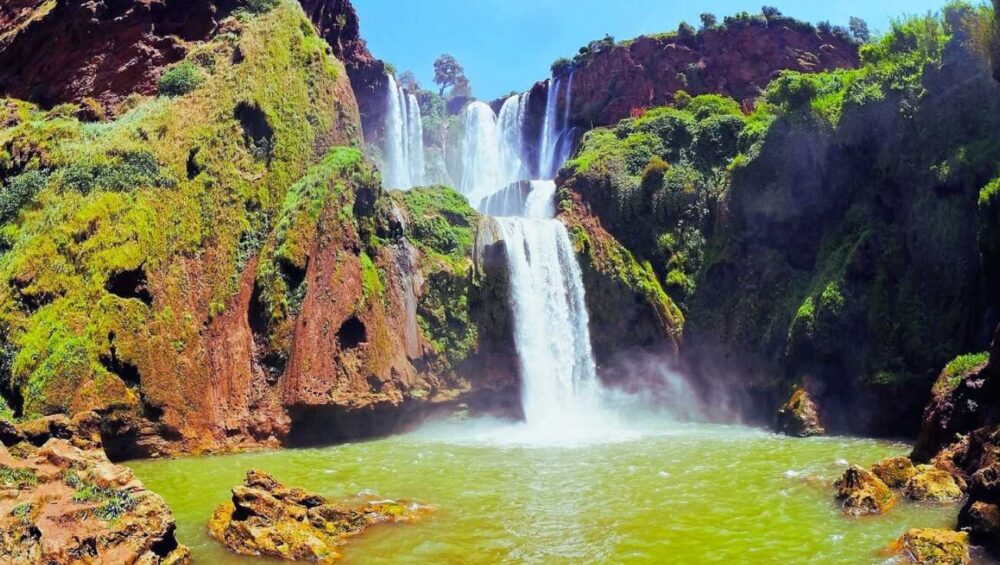
Nestled in the heart of Morocco’s Middle Atlas region, the Ouzoud Waterfalls Morocco are one of the country’s most breathtaking natural wonders. A marvel of nature, these waterfalls cascade over 110 meters into the lush valleys below, creating an enchanting spectacle of water, mist, and rainbow reflections that captivate every visitor. Located near the village of Tanaghmeilt in the province of Azilal, the Ouzoud Waterfalls are just a few hours’ drive from Marrakech, making them an ideal destination for a day trip or a weekend getaway.
Historical Significance of Ouzoud Waterfalls Morocco
The name “Ouzoud” is derived from the Berber word for “olive,” highlighting the region’s long-standing connection to olive cultivation. Historically, the surrounding valley has been home to Berber communities for centuries. The villages near the falls have retained their traditional charm, with stone houses, terraced fields, and centuries-old irrigation systems known as “seguias.” These terraces reflect the ingenuity of local populations in harnessing water for agriculture, providing a glimpse into the sustainable practices that have sustained communities for generations.

Visitors exploring the Ouzoud Waterfalls Morocco often encounter ancient mills along the streams. These traditional water mills, once vital for grinding grains and olives, are a testament to the region’s rich agricultural heritage. Some mills remain operational, offering travelers a unique chance to witness centuries-old techniques still in use today.
Ecological Wonders of Ouzoud Waterfalls Morocco
Beyond its historical significance, the Ouzoud Waterfalls Morocco region is a haven for biodiversity. The surrounding forests are populated with olive groves, cedar trees, and wildflowers, creating a rich ecological tapestry. The falls themselves are fed by the El-Abid River, which originates from the Atlas Mountains. This dynamic water system not only sustains local agriculture but also supports an array of wildlife, including Barbary macaques, chameleons, and various bird species.
Eco-tourists will delight in hiking trails that wind through the hills and forests around the waterfalls. These trails provide panoramic views of the cascading water, verdant valleys, and olive groves, while promoting an understanding of the delicate ecological balance in the region. Local guides often educate visitors about conservation efforts, emphasizing the importance of protecting both the waterfalls and the surrounding habitat for future generations.
Cultural Experiences at Ouzoud Waterfalls Morocco
The cultural experience at Ouzoud Waterfalls Morocco extends beyond nature. The nearby Berber villages offer authentic encounters with local traditions. Travelers can sample traditional Moroccan cuisine in village eateries, where dishes like tagine and couscous are often prepared using fresh, locally sourced ingredients. Tea ceremonies, a cornerstone of Moroccan hospitality, provide visitors with an opportunity to engage with local customs and stories.
Music and dance are also integral to the local culture. During festivals and special occasions, villagers perform traditional dances accompanied by drums and flutes, offering a vibrant celebration of Berber heritage. Visitors to the Ouzoud Waterfalls Morocco can sometimes witness these performances, adding a cultural richness to the natural spectacle.
Activities and Attractions
Visitors to the Ouzoud Waterfalls Morocco can engage in a variety of activities. Trekking enthusiasts can follow well-marked paths that lead to multiple viewpoints, each offering a unique perspective of the cascading falls. For those seeking adventure, swimming in the natural pools at the base of the falls provides a refreshing escape, while boat rides along the El-Abid River reveal hidden grottoes and smaller cascades.
Photography is another popular pursuit. The interplay of sunlight and mist often creates vivid rainbows, a signature feature of the Ouzoud Waterfalls Morocco. Wildlife photography is also rewarding, with opportunities to capture images of macaques interacting in their natural habitat, soaring birds, and lush flora.
Visiting Ouzoud Waterfalls Morocco
The best time to visit the Ouzoud Waterfalls Morocco is during the spring and early summer, when the water flow is strong and the surrounding vegetation is at its most vibrant. Autumn is also appealing, as the olive trees bear fruit and the valley takes on golden hues. While the falls are accessible year-round, winter months can bring lower water levels and cooler temperatures, making preparation essential for comfort.

Accommodations near the waterfalls range from traditional guesthouses in Berber villages to boutique hotels offering modern amenities with scenic views. Many lodgings provide guided tours, ensuring that visitors gain a deeper understanding of both the natural and cultural significance of the area.
Conclusion
The Ouzoud Waterfalls Morocco are more than just a spectacular natural landmark—they are a living tapestry of history, ecology, and culture. From the ancient water mills and Berber villages to the rich biodiversity and cascading waters, every aspect of the region tells a story. A visit to Ouzoud is a journey that engages all the senses: the sight of thundering waterfalls, the scent of olive groves, the sounds of birds and running water, and the taste of local cuisine. For travelers seeking a rich and immersive Moroccan experience, the Ouzoud Waterfalls Morocco stand as an unmissable destination, promising awe, adventure, and connection with one of North Africa’s most enchanting landscapes.