The Atlas mountain range stretches across North Africa like a natural backbone, separating the Mediterranean coast from the vast Sahara Desert. On a map, it looks enormous — and in reality, it is. But what makes the Atlas special isn’t just its size. It’s the variety.
In one part, you’ll find snow-covered peaks above 4,000 meters. In other areas, forests, valleys, or dry rocky landscapes that feel almost desert-like. And throughout the range, small Amazigh (Berber) communities continue to live much as they have for generations.
This guide explains the geography of the Atlas Mountainrange, its major peaks, climate patterns, and what to expect if you’re planning trekking or hiking in the region. If your goal is to explore the High Atlas with experienced local support, planning your trip with MT Toubkal Trek helps ensure a safe and well-organized mountain experience.
Where Is the Atlas Mountain Range Located?
The Atlas mountain range runs across three North African countries:
Morocco
Algeria
Tunisia
The entire system stretches for more than 2,500 kilometers from the Atlantic coast in Morocco to northeastern Tunisia.
Geographically, the range acts as a barrier:
North → Mediterranean climate and coastal plains
South → Dry landscapes leading toward the Sahara
However, the most visited and developed section for trekking and tourism is in Morocco, particularly the High Atlas Mountains near Marrakech and surrounding regions accessible via Marrakech excursions.
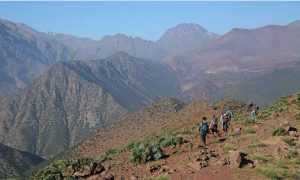
Main Sections of the Atlas Mountain Range
The Atlas system is divided into three major regions.
1. High Atlas Mountains
This is the highest and most dramatic part of the range.
Key features:
Peaks above 4,000 meters
Deep valleys and high passes
Traditional Berber villages
Main trekking region
Most hiking trips organized through MT Toubkal Trek take place here, starting from Imlil village, the gateway to many Atlas Mountains treks about 1.5–2 hours from Marrakech.
2. Middle Atlas
Located north of the High Atlas, this region offers a completely different landscape.
Highlights:
Cedar forests
Lakes and rolling hills
Cooler temperatures
It’s better suited for relaxed hiking and nature trips rather than high-altitude trekking.
3. Anti-Atlas
South of the High Atlas, closer to desert regions.
Characteristics:
Rocky terrain
Dry climate
Remote landscapes
This region is less developed for trekking but offers quiet and scenic routes for experienced hikers exploring deeper parts of Morocco.
Major Peaks in the Atlas Mountains
The atlas peaks vary widely in elevation, but most of the highest mountains are located in Morocco’s High Atlas.
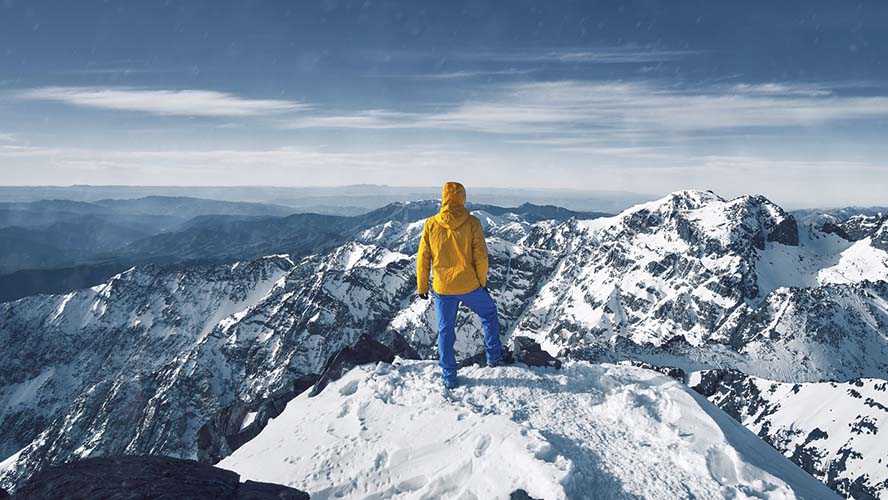
Mount Toubkal (4,167 m)
The highest peak in North Africa
Most popular trekking objective
Non-technical ascent in summer
Detailed routes and preparation tips can be found in the Complete Travel Guide to Toubkal Trek and the Best Guide to Mount Toubkal Trek.
Mount Ouanoukrim (4,089 m)
Located near Toubkal, offering a more challenging alternative to the standard ascent.
Jebel M’Goun (4,071 m)
Second highest peak in Morocco, located in the Central High Atlas and accessible via longer routes such as the M’Goun trekking itinerary.
For many travelers, reaching one of these atlas peaks becomes the highlight of their Morocco trip.
Geography and Landscape
The terrain of the Atlas Mountainrange changes dramatically from one region to another.
In the High Atlas:
Steep slopes and rocky trails
Snow at higher elevations
Deep river valleys
In the Middle Atlas:
Forests and meadows
Lakes and wildlife
In the Anti-Atlas:
Dry hills and dramatic rock formations
Sparse vegetation
This diversity is one of the reasons the Atlas attracts hikers of different experience levels, from short day trips from Marrakech to multi-day expeditions.
Climate of the Atlas Mountain Range
The climate varies by elevation and region.
High Atlas Climate
Cold winters with snow above 2,500–3,000 m
Mild to warm summers
Cool nights year-round
Middle Atlas Climate
Cooler and wetter
Snow is possible in winter
Anti-Atlas Climate
Warm and dry
Mild winters
The best seasons for hiking in the High Atlas Mountains are:
Spring (March–May)
Autumn (September–November)
These periods offer stable weather and comfortable temperatures. For detailed seasonal planning, see Best Time to Travel in Morocco and Morocco Travel Guide.
Hiking and Trekking in the Atlas Mountains
The Atlas Mountain range is one of the best trekking destinations in North Africa.
Popular options include:
Mount Toubkal Trek (2–3 days)
The most famous route, suitable for fit beginners. See the Mount Toubkal Day Trek Guide.
Azzaden Valley Trek (3–4 days)
Scenic trails through villages and mountain passes.
Toubkal Circuit (5–6 days)
A deeper exploration of the High Atlas via routes described in Toubkal Treks — Africa’s Highest Peak.
M’Goun Trek (5–7 days)
Remote and less crowded wilderness routes.
Organizing your trek with MT Toubkal Trek provides licensed guides, mule support, accommodation, and transport from Marrakech. You can explore more routes in Best Places for Morocco Trekking and Trekking in Morocco.
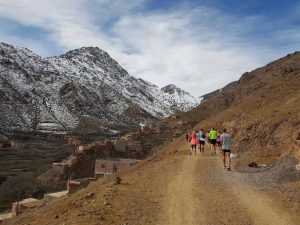
Difficulty Level for Atlas Hiking
Most trekking routes in the High Atlas Mountains require:
5–7 hours of walking per day
Moderate fitness level
Ability to handle altitude above 3,000 m
If you’re unsure about preparation, guides such as Do You Need to Train to Hike Toubkal? can help you assess readiness.
Cultural Life in the Atlas Mountains
One of the most memorable aspects of hiking in the Atlas Mountainrange is the cultural experience.
Along the trails, you’ll encounter:
Amazigh (Berber) villages
Terrace farming
Stone-built homes
Traditional hospitality
Many trekkers stay in local guesthouses, which adds a personal and authentic element to the journey. Explore this further in High Atlas Berber Villages of Morocco and Journey to Atlas Mountains Imlil.
Best Time for Hiking the Atlas Peaks
Spring (March–May)
Green valleys and comfortable temperatures
Summer (June–August)
Warm in lower areas, cooler at altitude
Autumn (September–November)
Clear skies and ideal trekking conditions
Winter (December–February)
Snow conditions — suitable only with winter equipment and experienced guides.
FAQ
Where is the Atlas Mountain Range located?
Across Morocco, Algeria, and Tunisia.
What is the highest Atlas peak?
Mount Toubkal at 4,167 meters.
Is hiking in the Atlas Mountains difficult?
Most routes are moderate, but altitude can be challenging.
What is the best time to hike the High Atlas?
Spring and autumn.
Key Takeaways
The Atlas mountain range stretches across Morocco, Algeria, and Tunisia.
The High Atlas Mountains are the main region for trekking and climbing.
Mount Toubkal is the highest of the major Atlas peaks.
The landscape varies from alpine terrain to forests and desert-like hills.
Spring and autumn offer the best hiking conditions.
Most treks require moderate fitness and involve altitude above 3,000 meters.
Planning your trip with MT Toubkal Trek ensures experienced guides, safety, and organized logistics.
Conclusion
The Atlas mountain range is more than just a geographical feature. It’s a region of dramatic landscapes, traditional communities, and trekking routes that still feel authentic and uncrowded.
Whether your goal is to summit Mount Toubkal, explore remote valleys, or simply experience life in the mountains, the High Atlas offers one of the most rewarding outdoor experiences in Morocco.
And when you’re ready to turn that plan into reality, organizing your journey with MT Toubkal Trek helps ensure a safe, well-planned, and truly memorable adventure.