
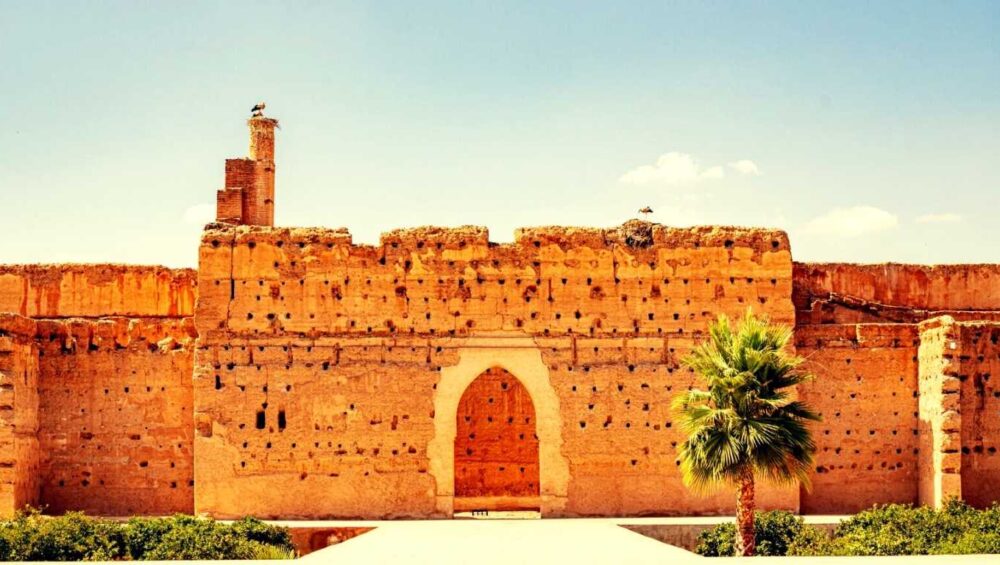
When travelers step into Marrakech, they are instantly captivated by its bustling souks, aromatic spices, colorful textiles, and rich history embedded in every corner of the medina. Among its most treasured historical landmarks stands Badi Palace Morocco, a majestic ruin that still whispers the glory of a once-magnificent empire. Known locally as El Badi Palace, this architectural marvel is both a symbol of Morocco’s opulent past and a reminder of the transience of worldly splendor. For history lovers, culture seekers, and curious travelers alike, a visit to Badi Palace Morocco is an essential stop in any Marrakech itinerary.
A Glimpse Into History
The story of Badi Palace Morocco begins in the late 16th century under Sultan Ahmad al-Mansur of the Saadian dynasty. Victorious after the Battle of the Three Kings in 1578, Al-Mansur sought to immortalize his triumph by constructing one of the grandest palaces in the Islamic world. Construction began in 1578 and continued for more than two decades.
The palace became a display of immense wealth and power, built with Italian marble, Indian onyx, Sudanese gold, and the finest Moroccan craftsmanship. Its name “El Badi” translates to “The Incomparable,” and indeed, at its peak, it lived up to its title. The Sultan hosted diplomats, artists, and dignitaries within its walls, showcasing Morocco’s influence and prestige on the global stage.
Sadly, the grandeur of Badi Palace Morocco was short-lived. In the 17th century, Sultan Moulay Ismail of the Alaouite dynasty stripped the palace of its treasures to adorn his new capital in Meknes. What remains today is a vast, hauntingly beautiful ruin—an open-air museum that still radiates echoes of past magnificence.
Exploring the Architecture
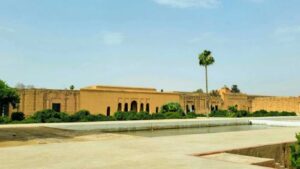
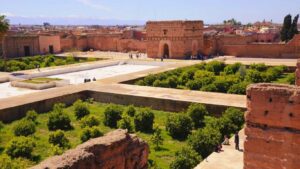
Though much of its decoration was removed, the Badi Palace Morocco still stuns visitors with its immense size and clever design. The palace complex stretches over 135 by 110 meters, with a central courtyard that was once adorned with reflecting pools and lush gardens.
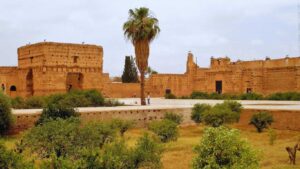
Visitors today can walk across this grand esplanade and imagine the splendor of royal receptions. The sunken gardens still preserve the geometric layout typical of Islamic architecture, blending symmetry with serenity. Around the courtyard stand tall walls, viewing platforms, and remnants of pavilions that once glistened with marble, mosaics, and gold leaf.
One of the most striking features of Badi Palace Morocco is its monumental scale. Even in ruin, its towering walls and expansive courtyards give a sense of the ambition behind its creation. Walking through its remains, travelers are reminded that this was once a stage for royal pageantry, diplomacy, and artistic expression.
Modern Attractions Within the Palace
Today, Badi Palace Morocco functions as a historical site open to visitors year-round. It also hosts the Marrakech Laughter Festival (Festival du Rire), an international comedy event that brings the ruins back to life with sound and laughter. This juxtaposition of modern entertainment within ancient walls beautifully illustrates Marrakech’s ability to merge tradition with contemporary culture.
In one of the preserved wings, visitors will also find the Koutoubia Minbar, a 12th-century pulpit originally crafted for Marrakech’s Koutoubia Mosque. This intricately decorated wooden masterpiece, transported from Córdoba in Andalusia, is considered one of the finest examples of Islamic art and woodworking. Its presence adds yet another layer of cultural richness to the palace site.
Practical Visitor Information
For travelers planning a trip to Badi Palace Morocco, here are some helpful details:
-
Location: The palace is located in the southern Medina of Marrakech, near the Saadian Tombs and within walking distance of Jemaa el-Fnaa square.
-
Opening Hours: Generally open daily from 9:00 AM to 5:00 PM. Hours may vary slightly with seasons and holidays.
-
Entrance Fee: Around 70 MAD (subject to change). Additional charges may apply for special exhibits.
-
Best Time to Visit: Early morning or late afternoon is ideal to avoid the midday heat and crowds. Sunset is especially magical, as the golden light illuminates the ruins.
-
Guided Tours: Hiring a local guide enhances the visit, as they can vividly recount stories of Sultan Ahmad al-Mansur, courtly ceremonies, and the palace’s dramatic downfall.
What Makes Badi Palace Morocco Special
Many travelers wonder why they should prioritize Badi Palace Morocco when Marrakech is home to other famous landmarks like the Bahia Palace, the Saadian Tombs, and the Koutoubia Mosque. The answer lies in its atmosphere. Unlike other sites that remain intact, the Badi Palace offers a sense of raw authenticity. Its crumbling walls and vast empty courtyards invite imagination.
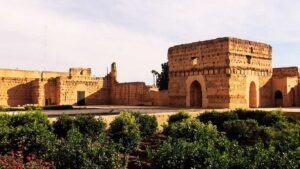
Standing in its courtyard, one can almost hear the echoes of music, poetry, and diplomatic conversations from centuries past. The swallows that now nest in the walls only add to its timeless character, making it a place where nature, history, and architecture converge.
Tips for Travelers
-
Wear Comfortable Shoes: The palace is expansive, with uneven stone surfaces.
-
Bring Water and Sun Protection: Shade is limited within the ruins, so a hat and sunscreen are essential.
-
Pair Your Visit: Combine your trip to Badi Palace Morocco with nearby attractions like the Saadian Tombs, Bahia Palace, or a stroll through the Mellah (old Jewish quarter).
-
Photography: The open courtyards, ancient walls, and rooftop views make this a photographer’s dream. Visit during golden hour for the best shots.
-
Local Guides: Engaging a knowledgeable guide helps bring the ruins to life, revealing stories that might otherwise remain hidden.
Cultural Significance
Beyond its role as a tourist attraction, Badi Palace Morocco symbolizes the rise and fall of dynasties, the shifting sands of history, and the artistic achievements of Moroccan civilization. It stands as a reminder of how Morocco was once a powerful player on the global stage, trading with Europe, the Middle East, and Africa.
For Moroccans, it is also a proud heritage site—one that continues to inspire artists, architects, and historians. Its preservation ensures that future generations can witness not only the grandeur of Morocco’s past but also the resilience of its cultural identity.
Conclusion
Visiting Badi Palace Morocco is not just about seeing ruins—it is about experiencing history in its rawest, most evocative form. Every brick, courtyard, and fragment tells a story of ambition, victory, and impermanence. While the treasures may have been stripped long ago, the spirit of the palace endures.
For travelers seeking a deeper connection to Morocco’s past, a walk through Badi Palace is a journey into the heart of Marrakech’s royal legacy. Whether you are a history enthusiast, an architecture admirer, or simply a curious explorer, Badi Palace Morocco promises an unforgettable encounter with the grandeur of a bygone era.
So next time you find yourself wandering the vibrant streets of Marrakech, make sure to step into the walls of Badi Palace Morocco. In its silence, you will hear the echoes of a thousand stories, waiting to be discovered.