
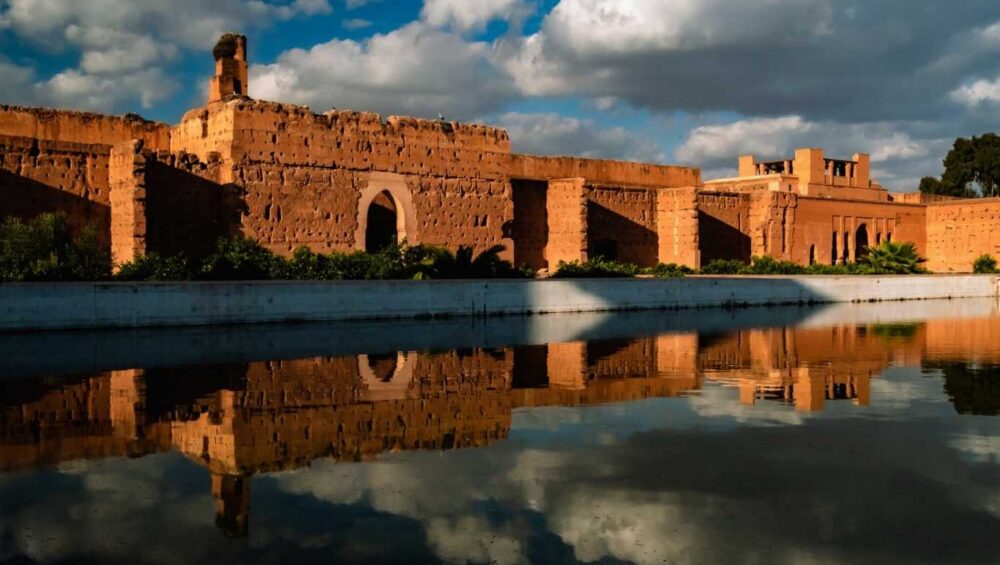
Marrakech, known as the Red City of Morocco, is a city that dazzles visitors with its blend of vibrant souks, fragrant gardens, and centuries-old monuments. Among its many historical treasures, few sites capture the imagination as powerfully as El Badi Palace. Once the epitome of Moroccan grandeur, this palace now stands as a vast ruin that whispers stories of past glory, architectural genius, and political intrigue. For travelers interested in history, culture, and the allure of Morocco’s imperial past, El Badi Palace is a must-see destination that combines awe-inspiring architecture with the atmosphere of a living museum.
The Birth of El Badi Palace
The history of El Badi Palace dates back to the late 16th century. Commissioned by Sultan Ahmad al-Mansur of the Saadian dynasty, the palace was conceived as a statement of wealth and power. Construction began in 1578, following Morocco’s victory at the Battle of the Three Kings, which brought great riches to the Saadian court. Inspired by Andalusian, Moroccan, and Islamic design traditions, the Sultan envisioned a palace that would outshine all others in North Africa.
Legend has it that El Badi Palace was built with the finest materials sourced from across the globe. Italian marble, Indian onyx, Sudanese gold, and tiles from Fez were all imported to create an architectural wonder that blended local artistry with international opulence. The result was a palace that symbolized Morocco’s role as a cultural and economic hub of the 16th century.
A Glimpse of Former Glory
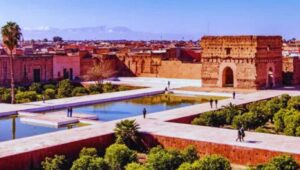
Visitors walking through the ruins of El Badi Palace today may find it hard to imagine the dazzling magnificence that once defined this place. Historical accounts describe over 350 richly decorated rooms, sprawling gardens with fountains, and massive courtyards where the Sultan held grand receptions. The central courtyard alone stretched more than 130 meters long and was adorned with a massive pool flanked by orange trees and exotic gardens.
Every corner of El Badi Palace reflected the Saadian vision of luxury and power. The walls were lined with mosaics and intricate stucco work, while cedarwood ceilings bore elaborate carvings. Decorative motifs from Islamic art merged seamlessly with Andalusian influences, making the palace a masterpiece of cultural synthesis. For decades, it was referred to as “The Incomparable Palace,” a name that perfectly described its unmatched splendor.
The Fall of El Badi Palace
Despite its magnificence, the glory of El Badi Palace was short-lived. Following the decline of the Saadian dynasty, the palace fell into disuse. In the 17th century, Sultan Moulay Ismail of the succeeding Alaouite dynasty ordered much of the palace’s treasures and building materials to be stripped and repurposed for his new capital in Meknes. Marble columns, decorative wood, and precious stones were transported away, leaving behind a skeleton of what was once the most beautiful palace in Morocco.
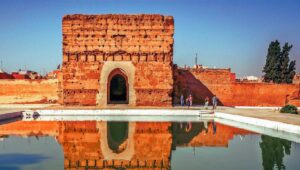
Today, what remains of El Badi Palace are its majestic ruins, offering visitors a haunting yet captivating glimpse into Morocco’s past. These ruins are more than just remnants of walls and foundations; they are living witnesses to the rise and fall of dynasties and the impermanence of worldly glory.
Exploring El Badi Palace Today
Walking through El Badi Palace is like stepping into an open-air museum. The vast courtyard remains intact, its rectangular pool reflecting the sky, surrounded by the shade of orange trees. Visitors can wander through the underground dungeons and passages, which once served as prison cells and storage areas. These dark corridors contrast sharply with the bright courtyards above, reminding travelers of the dual roles of power and control exercised by the Saadian rulers.
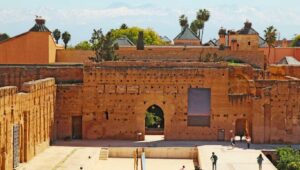
Another highlight of visiting El Badi Palace is climbing to the terrace. From the top, visitors are rewarded with sweeping views of Marrakech’s medina, the Koutoubia Mosque, and even the Atlas Mountains on clear days. This panoramic view alone makes the palace a favorite stop for photographers and history enthusiasts alike.
The Minbar of the Koutoubia
One of the most fascinating artifacts housed within El Badi Palace is the famous minbar of the Koutoubia Mosque. This intricately carved wooden pulpit, dating back to the 12th century, was originally crafted in Cordoba, Spain. Made of cedarwood and inlaid with ivory, gold, and silver, the minbar is a stunning example of Islamic art and craftsmanship. Today, it is carefully preserved and displayed inside the palace, offering visitors a chance to admire this extraordinary piece of history.
The Role of El Badi Palace in Moroccan Culture
Although much of its grandeur has been lost, El Badi Palace continues to play an important role in Morocco’s cultural life. It often hosts festivals, cultural events, and art exhibitions that breathe life back into its ancient walls. The Marrakech Popular Arts Festival, for example, has used the palace as a backdrop for performances that celebrate Moroccan traditions, music, and storytelling.
By visiting El Badi Palace, travelers not only explore ruins but also connect with the soul of Morocco’s heritage. The site bridges past and present, reminding visitors of the richness of Moroccan culture and the resilience of its history.
Practical Information for Visitors
For those planning a trip to Marrakech, visiting El Badi Palace is both easy and rewarding. The palace is located in the southern part of the medina, near the Mellah (the old Jewish quarter) and the Saadian Tombs. Its central location makes it easy to combine with other sightseeing destinations in the city.
-
Opening Hours: Typically open from 9 AM to 5 PM daily, though times may vary slightly depending on the season.
-
Entrance Fee: A modest fee is charged for entry, making it accessible for most travelers.
-
Best Time to Visit: Morning visits are ideal to avoid crowds and the midday heat. Late afternoons also provide beautiful lighting for photography.
-
Tips for Travelers: Wear comfortable walking shoes, as exploring the ruins requires some walking and climbing. Don’t forget to bring water, especially in the warmer months.
Why El Badi Palace Should Be on Your Itinerary
There are many reasons why El Badi Palace deserves a spot on every traveler’s Marrakech itinerary. Beyond its architectural and historical significance, the palace offers a unique atmosphere that blends grandeur with melancholy. The vast empty courtyards evoke both admiration and reflection, as visitors imagine the palace in its prime while standing amidst its ruins.
For history buffs, the story of El Badi Palace is a window into Morocco’s political and cultural past. For photographers, the interplay of light and shadow among the ruins creates stunning compositions. And for casual travelers, the palace offers a tranquil escape from the bustling souks and streets of Marrakech, providing a chance to pause and appreciate the weight of history.
Conclusion
El Badi Palace may no longer shine with gold and marble, but its ruins tell a story that is equally captivating. It is a monument to human ambition, creativity, and the impermanence of material wealth. Walking through its halls, courtyards, and terraces, visitors are reminded of Morocco’s rich heritage and the layers of history that make Marrakech a city like no other.
For anyone traveling to Morocco, visiting El Badi Palace is more than just a stop on a sightseeing list. It is a journey into the past, an exploration of art and culture, and a moment to connect with the timeless beauty of Marrakech. Whether you are a lover of history, architecture, or simply someone seeking inspiration, El Badi Palace will leave a lasting impression.