
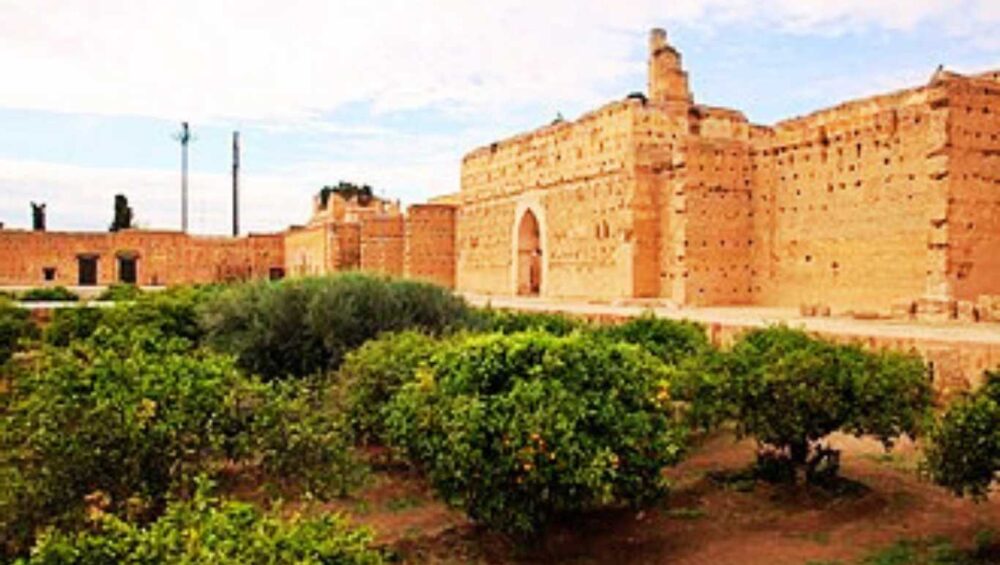
Marrakech is a city where history and culture blend seamlessly with the vibrant life of the present. Among its many treasures, none capture the grandeur of Morocco’s imperial past quite like Badi Palace. Known in Arabic as Qasr al-Badi, or the “Palace of the Incomparable,” this majestic site was once the pride of the Saadian dynasty. Today, although it stands in ruins, Badi Palace continues to fascinate travelers from around the world with its scale, history, and atmosphere. Visiting the palace is like stepping back in time to an era when Marrakech was the epicenter of wealth, power, and artistry in North Africa.
In this article, we will explore the rich history, magnificent architecture, cultural significance, and present-day experience of Badi Palace, making it clear why this destination is a must-see for anyone traveling to Marrakech.
A Brief History of Badi Palace
Construction of Badi Palace began in 1578 under the orders of Sultan Ahmad al-Mansur of the Saadian dynasty. The timing of its creation was symbolic: it commemorated the Sultan’s great victory over the Portuguese army at the Battle of the Three Kings. With the ransom and wealth gained from this victory, combined with the riches of Morocco’s sugar trade and gold from the conquered lands of West Africa, Ahmad al-Mansur had the resources to build a palace that would rival the greatest royal complexes of the Islamic world.
 Over fifteen years, artisans from Morocco, Andalusia, Italy, and even Timbuktu contributed to the construction and decoration of Badi Palace. Materials included Carrara marble imported from Italy, onyx, ivory, gold, and precious woods. The Sultan’s vision was to create a structure that embodied the prosperity and refinement of his reign. For decades, the palace dazzled foreign envoys and served as the backdrop for royal ceremonies, banquets, and audiences.
Sadly, after the decline of the Saadian dynasty, Badi Palace began to lose its luster. By the late 17th century, the Alaouite Sultan Moulay Ismail ordered its dismantling to reuse its materials in his new capital at Meknes. What once was a jewel adorned with gold and mosaics was reduced to bare walls and empty courtyards. Despite this, the ruins themselves remain awe-inspiring, giving us a glimpse into the magnitude of the original structure.
Architecture and Layout
The design of Badi Palace reflects the fusion of Moroccan, Moorish, and Andalusian influences. The palace covered an immense area, with its core being a rectangular courtyard measuring 135 by 110 meters. At the center lay a monumental pool, nearly 90 meters long, flanked by sunken gardens filled with orange trees and aromatic plants.
Four main pavilions surrounded this courtyard:
-
The Crystal Pavilion (Qubbat az-Zujaj), reserved for the Sultan’s private use.
-
The Audience Pavilion (Qubbat al-Khamsiniya), where official receptions and ceremonies were held.
-
The Green Pavilion, a two-story structure with guest quarters, possibly for ambassadors.
-
The Heliotrope Pavilion, which may have connected to the Sultan’s harem and women’s quarters.
Each pavilion was richly decorated with mosaics, stucco carvings, and gilded ceilings. Contemporary chroniclers wrote of walls encrusted with gold, ceilings inlaid with gems, and marble floors polished to perfection. Fountains adorned with sculpted animals spouted water into basins, reflecting the Andalusian love of combining architecture with flowing water.
Today, much of this splendor is gone, but visitors can still appreciate the grand proportions of the site and the remnants of zellij tilework and carved stucco. Standing in the vast courtyard, one can easily imagine the majesty that once defined Badi Palace.
Cultural Significance
Beyond its architectural magnificence, Badi Palace holds deep cultural importance. It was more than a royal residence; it was a symbol of Morocco’s political power in the 16th century. The palace demonstrated the wealth gained from trade routes stretching from sub-Saharan Africa to Europe and the Middle East.
The name “El Badi” itself is significant. Derived from one of the 99 names of God in Islam, al-Badi means “the Incomparable” or “the Brilliance.” Sultan Ahmad al-Mansur’s choice of name reflected not only his piety but also his desire to create a palace that stood above all others, embodying perfection and magnificence.
Even in ruin, Badi Palace has become a cultural hub. Each year, it hosts festivals, concerts, and art exhibitions, breathing new life into the ancient walls. Storks, which nest atop the ramparts, add a touch of nature to the historic site, creating a peaceful and almost poetic atmosphere.
The Present-Day Visitor Experience
Today, Badi Palace is one of the most visited monuments in Marrakech. Tourists are drawn not only by its history but also by the evocative power of its ruins. Walking through its courtyards and underground chambers, visitors gain a sense of both loss and grandeur.
Highlights of a visit include:
-
The Central Courtyard: The sheer size of the esplanade and the remains of the central pool inspire awe.
-
The Ramparts: Climbing to the top offers panoramic views of Marrakech’s medina, with the Atlas Mountains in the distance.
-
Underground Chambers: Once used as dungeons or storage, these chambers now house exhibitions on the Saadian dynasty.
-
The Kutubiyya Minbar: A masterpiece of Islamic art, this intricately carved wooden pulpit from the 12th century is displayed in the palace museum.
Practical details make visiting easy: Badi Palace is open daily from 9 a.m. to 5 p.m., with tickets priced at around 100 MAD (about £8). Its location in the Kasbah district places it within walking distance of other key attractions such as the Saadian Tombs, Bahia Palace, and Jemaa el-Fna Square.
What Travelers Say
Modern visitors consistently describe Badi Palace as a fascinating destination that captures the imagination. While some note that the ruins lack extensive explanatory signage, most agree that the site’s vast scale and atmosphere make it unforgettable. Travelers often compare the experience to visiting the Roman Forum in Rome or the Acropolis in Athens—ruins that, despite their lost grandeur, still convey immense historical significance.
Families enjoy wandering through the gardens and underground passages, while history enthusiasts admire the architectural remains and the stories they tell. Photographers especially love the contrast between the reddish walls, blue skies, and white storks perched on the ramparts.
Tips for Visiting Badi Palace
-
Take a guided tour – Guides can provide historical details that bring the ruins to life.
-
Visit early or late – The midday sun in Marrakech can be intense, so early morning or late afternoon visits are more comfortable.
-
Combine with nearby attractions – A tour of Badi Palace, the Saadian Tombs, and Bahia Palace makes for a perfect day of cultural discovery.
-
Bring cash – Entry fees are often payable in cash only.
-
Climb the ramparts – The views are one of the highlights of the visit and should not be missed.
Conclusion
Though stripped of its former splendor, Badi Palace remains one of the most captivating landmarks in Marrakech. Its vast courtyards, crumbling walls, and historical resonance make it a place where the past and present converge. Standing within its ruins, you can almost hear the echoes of royal banquets, the whispers of ambassadors, and the footsteps of artisans who once built this “Palace of the Incomparable.”
For travelers eager to understand the legacy of Morocco’s golden age, Badi Palace is an essential stop. It embodies the rise and fall of dynasties, the artistry of Islamic architecture, and the enduring spirit of Marrakech. Whether you are a lover of history, architecture, or simply the romance of ruins, a visit to Badi Palace will leave a lasting impression.