
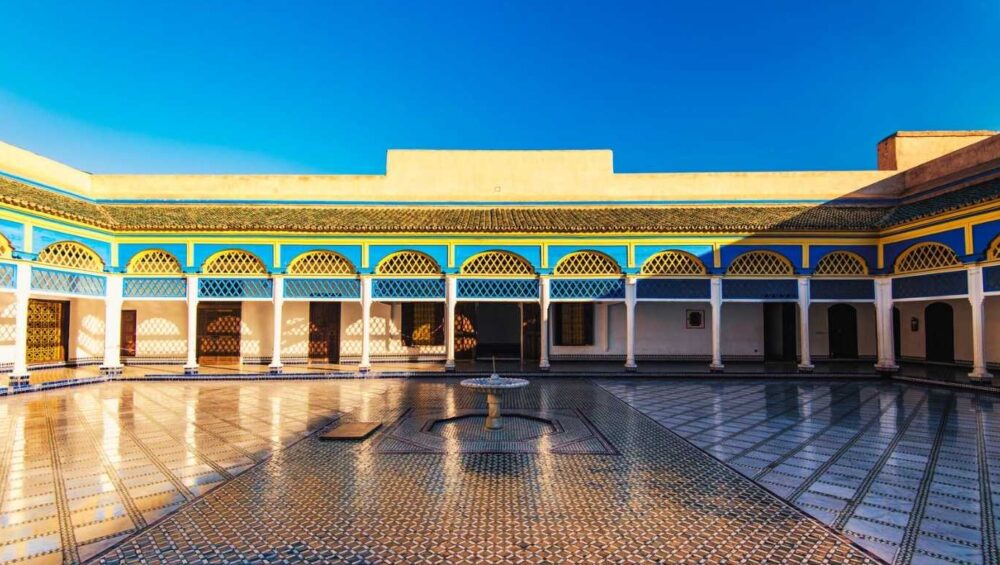
When travelers set foot in Marrakech, the vibrant “Red City” of Morocco, they are instantly surrounded by a tapestry of sights, sounds, and aromas. The bustling souks, the rhythmic calls to prayer, and the blend of tradition with modernity create a city like no other. Yet, amid this whirl of energy, there exists a place of serenity, artistry, and timeless beauty: Bahia Palace. This historic monument is not only one of Marrakech’s most visited landmarks but also a living testimony to Morocco’s architectural brilliance and cultural heritage.
Visiting Bahia Palace is more than just walking through a royal residence. It is an immersion into Moroccan craftsmanship, history, and aesthetics that still captivate travelers from across the globe. Whether you are an architecture enthusiast, a lover of history, or simply a curious visitor, Bahia Palace offers a deeply enriching experience.
The Origins of Bahia Palace
The story of Bahia Palace begins in the 19th century, during a time when Morocco was a land of dynastic power and artistic flourishing. Construction started in the 1860s under Si Moussa, the powerful grand vizier of Sultan Hassan I. Later, his son, Ba Ahmed, who became grand vizier in 1894, expanded the palace to its current grandeur. The name “Bahia” translates to “brilliance” or “beautiful,” and the palace was built with the intention of being the most magnificent dwelling of its era.
Ba Ahmed envisioned Bahia Palace not only as a symbol of power but also as a retreat of beauty and luxury. The palace was designed to accommodate his four wives, his many concubines, and a court of servants. At the time, it was considered one of the most extraordinary palaces in Morocco, a true showcase of wealth, artistry, and influence.
Architecture That Inspires Awe
One of the most striking aspects of Bahia Palace is its architecture. Unlike many European palaces that emphasize grand façades and towering structures, Bahia Palace embodies the essence of Moroccan and Islamic design, focusing inward on courtyards, gardens, and intricate detail.
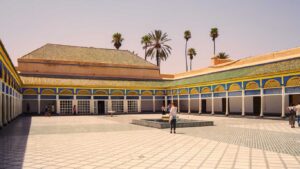
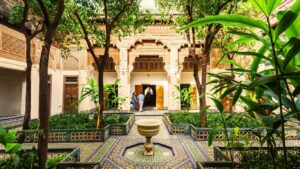
As you step inside, you are greeted with expansive courtyards paved with white marble and surrounded by arched galleries. The palace is a harmonious blend of Andalusian, Moorish, and Moroccan styles, reflecting the cultural influences that shaped Marrakech over centuries.
Key Architectural Highlights:
-
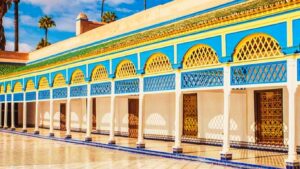
Zellige Tilework: The palace walls are adorned with intricate zellige, a type of hand-cut mosaic tilework that creates dazzling geometric patterns. Each tile is placed with precision, forming designs that both mesmerize and symbolize Islamic spirituality.
-
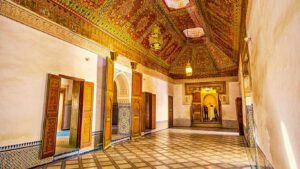
Carved Cedarwood: Many ceilings are crafted from painted cedarwood sourced from the Atlas Mountains. These ceilings, with their elaborate floral and geometric motifs, showcase the skill of Moroccan artisans.
-
Stucco and Marble: Delicate stucco carvings adorn doorways and arches, while Italian Carrara marble highlights the courtyards, emphasizing the palace’s status as a luxurious residence.
-
The Harem Rooms: Perhaps the most intimate part of Bahia Palace, these rooms reflect the private lives of Ba Ahmed’s wives and concubines. Their ceilings, painted in vibrant reds, blues, and golds, evoke a sense of opulence and secrecy.
Exploring the Grandeur: What to See Inside Bahia Palace
The palace covers approximately 8,000 square meters, a maze of courtyards, gardens, and halls that seem to stretch endlessly. To fully appreciate Bahia Palace, it’s best to take your time wandering through its interconnected rooms and open-air spaces.
-
The Grand Courtyard
This marble courtyard, surrounded by whitewashed walls and elegant arches, is one of the palace’s most iconic features. The symmetry and calm atmosphere make it a favorite spot for photographers. -
The Council Room
Once used by Ba Ahmed to meet with dignitaries and guests, this hall is richly decorated and still exudes an aura of power. Imagine political discussions and royal strategies being shaped within its walls. -
The Small Riad
A riad is a traditional Moroccan garden surrounded by rooms. The Small Riad at Bahia Palace offers a more intimate experience, with orange trees, fountains, and a serene atmosphere perfect for reflecting on the palace’s beauty. -
The Harem Quarters
These private chambers reveal the personal world of Ba Ahmed. Their design contrasts with the more public spaces, offering intricate woodwork, colorful ceilings, and secluded courtyards. -
The Large Riad
At the heart of Bahia Palace lies the Large Riad, an expansive garden filled with cypress trees, jasmine, and fountains. This space feels like a sanctuary, where nature and architecture unite seamlessly.
The Atmosphere Today
Walking through Bahia Palace today, you will notice its calm and almost dreamlike atmosphere. Unlike the hectic streets of Marrakech, the palace feels like stepping into another world, where time slows down and every detail speaks of Morocco’s artistry. The chirping of birds in the gardens, the coolness of marble under your feet, and the filtered sunlight through wooden latticework create an ambiance that is both peaceful and inspiring.
Though the palace no longer serves as a royal residence, it continues to play a role in Morocco’s cultural identity. It is frequently used for official ceremonies, cultural events, and sometimes even as a filming location for movies and documentaries.
Bahia Palace in Marrakech’s Cultural Landscape
Visiting Marrakech would feel incomplete without experiencing Bahia Palace. The city itself is home to other famous landmarks, such as the Koutoubia Mosque, the Saadian Tombs, and the bustling Jemaa el-Fnaa square. Yet, Bahia Palace holds a unique charm. It doesn’t just tell the story of kings and viziers but also reflects the lives of artisans, servants, and the Moroccan people whose work and traditions made such beauty possible.
For travelers interested in Moroccan history, Bahia Palace is a living museum. It connects the past with the present, offering lessons in how architecture and design can serve both functional and aesthetic purposes. It is a celebration of Moroccan identity, where every mosaic and carving whispers stories of faith, family, and power.
Practical Information for Visitors
If you’re planning a trip to Marrakech, here are some essential tips for visiting Bahia Palace:
-
Opening Hours: Bahia Palace is usually open daily from 9:00 am to 5:00 pm, though hours may vary during holidays.
-
Entrance Fee: A small fee is required (usually less than 10 USD), making it one of the most accessible landmarks in the city.
-
Best Time to Visit: Mornings are ideal, as crowds are smaller and the light is perfect for photography.
-
Guided Tours: Hiring a local guide can enrich your experience, offering insights into the history and symbolism of the palace’s design.
-
Dress Comfortably: While there is no strict dress code, modest attire is appreciated out of respect for local culture.
Why Bahia Palace Should Be on Your Travel List
Marrakech is a city of contrasts: chaotic yet serene, ancient yet modern, traditional yet cosmopolitan. Among its many treasures, Bahia Palace stands out as a must-see destination. It is not only a masterpiece of Moroccan architecture but also a place where visitors can connect with the essence of Moroccan culture.
When you walk through its courtyards, touch its cool marble, or admire its vibrant ceilings, you are not just visiting a tourist site. You are experiencing a chapter of Morocco’s living history. Bahia Palace is a timeless reminder that beauty and power, art and daily life, can coexist in harmony.