
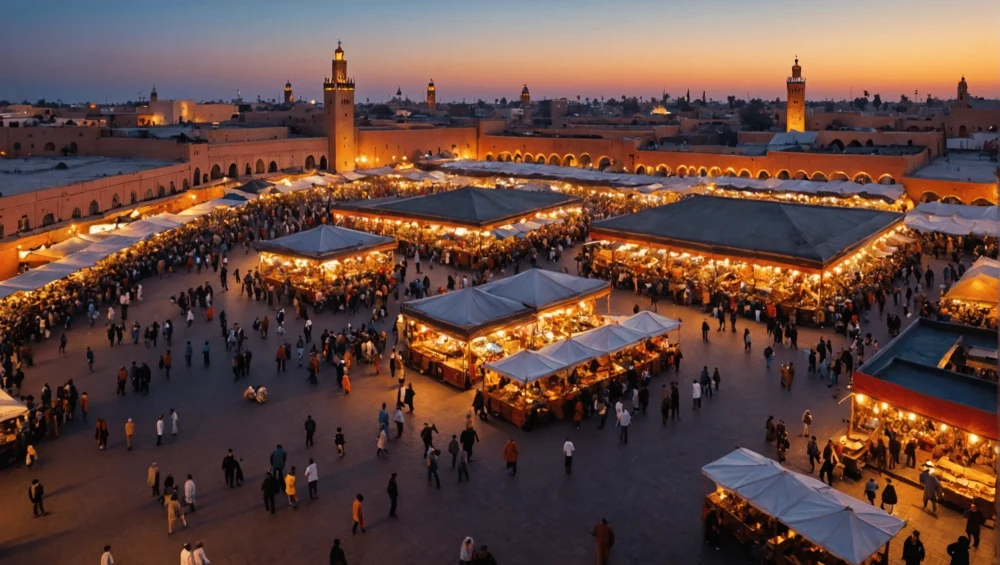
In the very center of Marrakech lies a place that is not just a square, but a living experience that defines the soul of Morocco. Jamaa El Fna is one of the most famous public squares in the world, a UNESCO-recognized cultural space, and the emotional heartbeat of the Red City. For centuries, this iconic square has been a meeting point for travelers, locals, performers, merchants, and storytellers. Today, jamaa el fna remains an unmissable destination for anyone visiting Morocco, offering a sensory journey that blends history, tradition, sound, color, and flavor into one unforgettable experience.
The Historical Roots of Jamaa El Fna
The history of jamaa el fna dates back to the founding of Marrakech in the 11th century during the Almoravid dynasty. Originally, the square served as a gathering place for public announcements, trade, and social interaction. Its name has inspired many interpretations, often translated as “Assembly of the Dead” or “Mosque of Nothingness,” hinting at its historical role as a place where justice was delivered and public events were held.
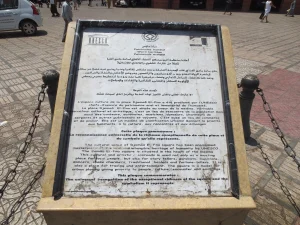
Over time, jamaa el fna evolved from a simple gathering space into a powerful cultural stage. Oral traditions were preserved here long before books were accessible to the masses. Storytellers, poets, and musicians passed down legends, moral tales, and historical narratives through spoken word, keeping Moroccan heritage alive through generations.
A Square That Transforms From Day to Night
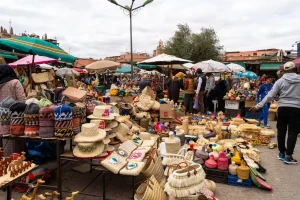
One of the most fascinating aspects of jamaa el fna is how dramatically it changes throughout the day. In the morning, the square feels open and calm. Orange juice vendors line the paths with towers of fresh oranges, their presses working nonstop. Snake charmers appear with cobras swaying to the sound of flutes, while henna artists decorate hands with intricate designs.
As the afternoon progresses, street performers begin to gather. Acrobats form human pyramids, Gnawa musicians play hypnotic rhythms, and traditional healers display herbs and remedies passed down through ancestral knowledge. Every corner of jamaa el fna offers something new, making it impossible to experience the same scene twice.
When night falls, jamaa el fna transforms into a spectacular open-air theater. Smoke rises from dozens of food stalls, lanterns glow against the dark sky, and the air fills with the aroma of grilled meat, spices, and mint tea. The square becomes alive with energy, sound, and movement, drawing thousands of people into its magnetic atmosphere.
Street Food Culture at Jamaa El Fna
Food is one of the biggest attractions of jamaa el fna, and dining here is an experience in itself. The famous night food stalls offer a wide range of traditional Moroccan dishes prepared fresh in front of visitors. From sizzling kebabs and merguez sausages to slow-cooked beef stew and lamb head, the variety reflects the richness of Moroccan cuisine.
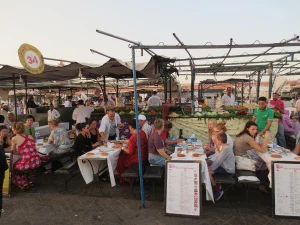
Snails cooked in aromatic broth are a popular local specialty, believed to have health benefits. Harira soup, especially popular in the evening, provides warmth and comfort. Fresh bread is constantly delivered, and sweet treats like chebakia and dates complete the experience.
Eating at jamaa el fna is not about luxury dining. It is about authenticity, atmosphere, and connection. You sit shoulder to shoulder with locals and travelers, sharing tables, laughter, and stories. The experience captures the true spirit of Marrakech.
Performers and Living Traditions
What truly sets jamaa el fna apart from any other square in the world is its performers. Storytellers, known locally as “halqa,” gather crowds in circles, captivating listeners with expressive gestures and dramatic voices. Even if you do not understand Arabic, the emotion and rhythm make the performance powerful.
Musicians from different regions of Morocco bring diverse sounds to the square. Gnawa groups play spiritual music rooted in African heritage. Berber musicians perform with drums and flutes, while dancers move to ancient rhythms that have survived centuries.
These performances are not staged shows for tourists. They are living traditions practiced by people whose families have performed in jamaa el fna for generations. This continuity is one of the reasons UNESCO recognized the square as a Masterpiece of the Oral and Intangible Heritage of Humanity.
Jamaa El Fna and Moroccan Daily Life
For locals, jamaa el fna is more than a tourist attraction. It is a social space where people meet friends, celebrate events, and earn a living. Vendors, performers, and food stall owners depend on the square for their livelihoods. Children grow up watching these traditions, learning the rhythms, stories, and customs that shape Moroccan identity.
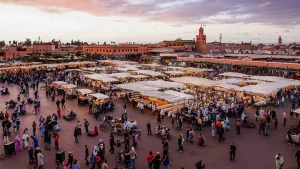
During religious celebrations, national holidays, and major events, jamaa el fna becomes even more vibrant. The square reflects the pulse of the city, responding to joy, hardship, and change while remaining deeply rooted in tradition.
Best Time to Visit Jamaa El Fna
While jamaa el fna is active all day, the best time to experience its full magic is from late afternoon into the night. Arriving around sunset allows you to witness the transformation of the square. The changing light, the rise of food stalls, and the increase in performers create a memorable transition.
For photography lovers, sunset provides stunning contrasts between the sky, the Koutoubia Mosque in the background, and the bustling square below. Nighttime offers dramatic scenes filled with smoke, lantern light, and human expression.
Tips for Visiting Jamaa El Fna
Visiting jamaa el fna is exciting, but it helps to be prepared. Always ask permission before taking photos of performers, and expect to give a small tip in return. Keep personal belongings secure, as crowded spaces can attract pickpockets.
When dining at food stalls, choose busy ones with high turnover, as this usually means fresher food. Do not hesitate to ask prices before ordering to avoid misunderstandings. Most importantly, approach the experience with curiosity and respect for local customs.
Jamaa El Fna as a Symbol of Marrakech
More than any monument or palace, jamaa el fna represents the true essence of Marrakech. It is chaotic yet organized, ancient yet alive, overwhelming yet welcoming. The square captures the contradictions that make Morocco so fascinating.
Every visit to jamaa el fna feels different. Sounds overlap, stories unfold, and moments appear unexpectedly. It is a place where history is not displayed behind glass, but performed, tasted, and lived every single day.
Conclusion
To visit Marrakech without experiencing jamaa el fna is to miss the soul of the city. This legendary square is not just a destination, but a journey into Moroccan culture, tradition, and humanity. Whether you come for the food, the performances, the history, or the atmosphere, jamaa el fna leaves a lasting impression that stays with you long after you leave Morocco.
For travelers seeking authenticity, energy, and cultural depth, jamaa el fna is not just a place to see. It is a place to feel, to listen, and to remember.