The Atlas Mountains photography opportunities are the kind that make photographers come back. The range is extraordinary — soft morning light on Berber villages, dramatic summit ridgelines, snow-fed rivers cutting through walnut groves, kasbahs framed by high peaks, and a quality of clear mountain air that gives distant subjects a sharpness that’s genuinely difficult to achieve elsewhere. Morocco’s High Atlas is, by most photographers’ reckoning, one of the most underrated landscape destinations on the continent.
This guide covers eight of the best specific locations for Atlas Mountains photography, along with practical information on light conditions, timing, and camera settings for each. Whether you’re shooting on a smartphone or carrying a full kit, these locations deliver consistently strong results when approached with the right timing.
| “The Atlas Mountains give you everything — mountain drama, human warmth, ancient architecture, and light that changes by the hour. Photographers who come once tend to come back.” |
Why the Atlas Mountains Are So Photogenic
Several things make the High Atlas particularly photogenic for photographers. First, the vertical range — from green valleys at 1,200 metres to bare, rocky summits above 4,000 metres — creates dramatic tonal contrast within the same frame. Second, the architecture. Berber villages built from the same earth-red stone as the mountains around them look like they grew out of the landscape rather than being placed on it. Third, the clarity of mountain air at altitude, which gives landscapes a sharpness and depth that photographers working in hazy lowland environments rarely get to experience.
The human element is also exceptional. The Berber villages around Imlil and throughout the High Atlas have a daily rhythm — mule trains, women carrying loads on their heads, children heading to school, men working on stone walls — that produces compelling environmental portraiture without needing to manufacture a scene. The key is being there at the right time of day and asking permission before photographing individuals.
8 Best Spots for Atlas Mountains Photography
| 1. Imlil Village at Dawn [Landscape + Portraits] |
| The village of Imlil at first light is one of those spots that doesn’t require any effort to compose — the village frames itself. Red-mud buildings, wooden balconies, terraced fields dropping into the valley, and the peaks behind still catching the first light while the village is in blue-grey shadow. The contrast between the illuminated peaks and the shaded foreground creates a naturally compelling tonal split that’s very hard to recreate later in the day.
The early morning also catches the working rhythms of the village before the tourist activity picks up — bread being carried, smoke rising from kitchens, mules being loaded for the day. These moments are available for about an hour after sunrise before the dynamic changes. Camera Notes: → Use a mid-range lens (35-50mm) to capture village and peaks in one frame → Shoot from the upper paths looking down into the valley for depth → Expose for the lit peaks, let foreground fall into natural shadow → Best light: 20 mins before to 30 mins after sunrise |
| 2. Toubkal Summit Ridge [Mountain Landscapes] |
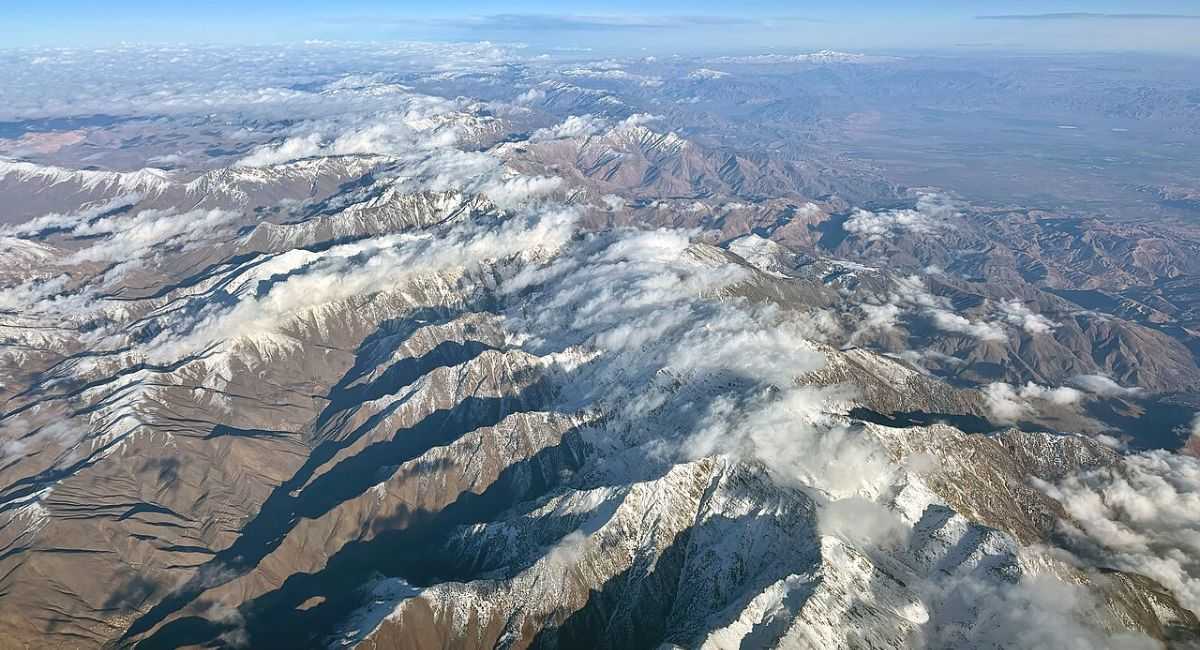
| The summit and approach ridges of Jebel Toubkal offer the most dramatic landscape photography in the High Atlas — vast views across Morocco’s highest terrain, snow lingering on north-facing slopes into early summer, and a scale that makes other subjects feel modest by comparison. The key photographic challenge here is the very thing that makes it compelling: at 4,167 metres, the horizon drops away on all sides, meaning standard landscape composition rules need rethinking.
The summit is clearly not a casual photography location — it requires a proper Toubkal trek to reach. But for photographers willing to make the commitment, the pre-dawn light from the summit approach and the full panorama at first light rewards the effort significantly. Camera Notes: → Bring a wide-angle lens (16-24mm) — the panoramic scale demands it → Pre-dawn shots catching the alpenglow on surrounding peaks are exceptional → Wind at altitude can cause camera shake — use high shutter speeds even on a tripod → Extra batteries essential: cold kills battery life fast at altitude |
| 3. Mizane Valley from the Trail [Valley Landscapes] |
| The Mizane Valley, which runs south from Imlil toward Toubkal, offers extraordinary compositions throughout its length — particularly in the late afternoon when the sun drops behind the western ridgeline and a warm, raking light sweeps across the terraced fields and walnut groves on the valley floor. This is the kind of light that makes ordinary subjects look exceptional, and the valley has enough natural structure — winding river, terraces, scattered villages — to organise a frame without much effort.
Spring is the peak season for this specific location, when snowmelt feeds the river visibly and the almond and walnut trees are in varying states of leaf. Autumn, with its yellow and orange foliage against the dark stone, runs a close second. Any of the Imlil hiking trails through the valley will put you in a position for these shots. Camera Notes: → Telephoto (70-200mm) compresses valley layers beautifully → Look for leading lines: the river, trail, or terrace edges drawing the eye in → Late afternoon in spring or autumn — colour contrast is at its strongest → Polariser filter reduces glare on the river and saturates vegetation colours |
| 4. Ksar Ait Ben Haddou [Architecture + History] |
| Technically on the southern edge of the Atlas rather than within the range itself, Ksar Ait Ben Haddou is one of the most photographed sites in Morocco for very good reason. The fortified ksar — towers, walls, and houses built from compacted earth — photographs best in the golden hour light when the sun strikes it from a low angle and the earth tones shift from tan to deep amber. The setting, with the dried riverbed in front and the ridgeline behind, gives multiple compositional options depending on your position.
Early morning, before the coach groups arrive, gives you near-empty foregrounds. The interior of the ksar has interesting architectural detail work — carved wooden doors, geometric earthen patterns, stacked tower windows — that rewards a macro or standard lens exploration while the light is still soft. Camera Notes: → Shoot from across the riverbed for the classic full-ksar frame → Late afternoon in summer positions the sun directly on the front face → Inside the ksar, look upward for geometric tower compositions → ND filter useful for long-exposure river shots in the foreground |
| 5. Ait Benhaddou to Aroumd: Berber Village Portraits [Documentary + Portraits] |
| The string of villages between Imlil and Aroumd offers the richest environmental portraiture opportunities in the High Atlas. The daily routines of village life play out against a backdrop of stone walls, wooden doors in shades of blue and green, and the valley landscape beyond. Children are naturally animated; older residents often have extraordinarily expressive faces. The key is approaching slowly, spending time in a village before photographing, and always asking permission for individual portraits — something a local guide makes significantly easier.
This is where the High Atlas reveals itself through people rather than landscape — and those images tend to be the most meaningful long after the trip. Camera Notes: → A short telephoto (85-135mm) for candid moments without being intrusive → Doorway light: position subjects in shade of a doorway, shoot from outside → Don’t rush — spend 20 mins in a village before lifting the camera → Always ask permission; a local guide helps enormously with this |
| 6. Tamatert Pass Viewpoint [Panoramic Landscapes] |
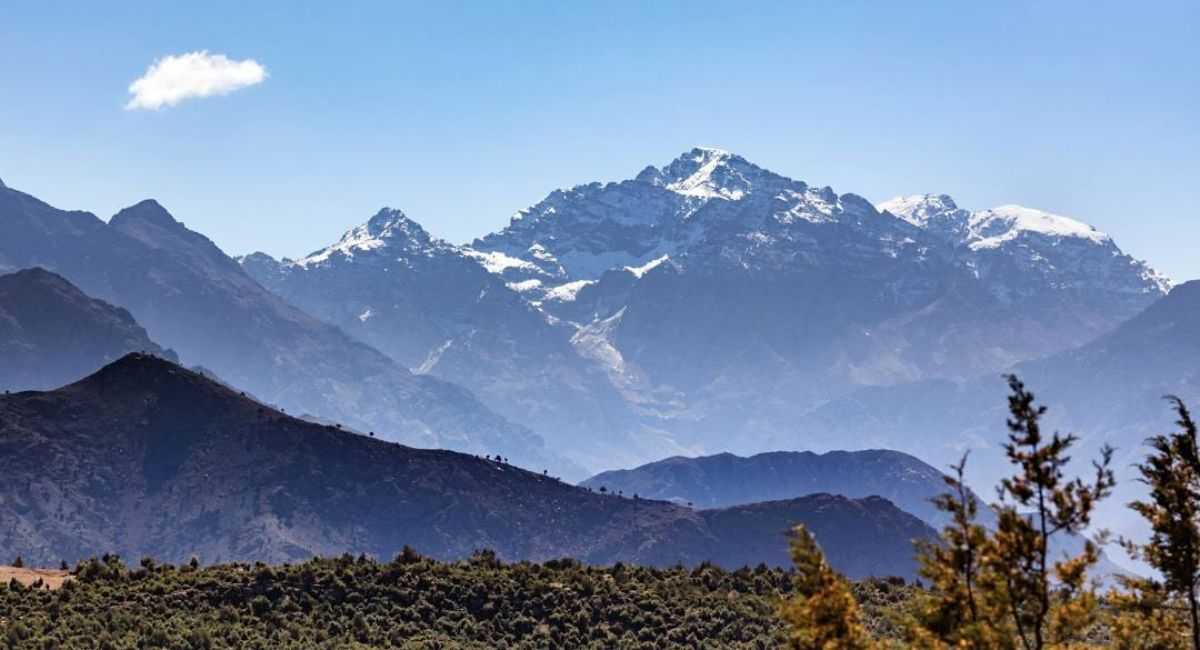
| The Tamatert pass above Imlil offers one of the best panoramic views in the region, with the full Mizane Valley spread below and the High Atlas peaks arranged on the horizon. It’s a moderate hike to reach — around 4-5 hours return from Imlil — but the photographic payoff at the viewpoint is substantial, particularly in the morning when the valley is still partly in shadow, and the peaks are fully lit.
This location works well for photographers specifically interested in landscape photography at scale — the kind of wide establishing shot that conveys how large and layered the landscape actually is, which is genuinely difficult to capture from within the valley itself. Camera Notes: → Bring a wide-angle and a telephoto — the scene demands both → Morning works better than afternoon for this north-facing viewpoint → Use a small aperture (f/11) for front-to-back sharpness → Arrive early — cloud can build from mid-morning |
| 7. Gorges: Todra and Dadès [Abstract + Drama] |
| The Todra and Dadès Gorges, south of the High Atlas on the route toward Merzouga, offer some of the most dramatic geological subjects in Atlas Mountains photography — sheer rock walls rising hundreds of metres from narrow canyon floors — sheer rock walls rising hundreds of metres from narrow canyon floors, with the light penetrating only at specific angles for short windows during the day. The Todra Gorge is narrower and more intensely photogenic at its apex; the Dadès has a longer, winding character that rewards wider lenses and aerial-style compositions from the road above.
Both gorges are worth treating as dedicated photography locations rather than just passing through. The quality of light in the Todra Gorge’s narrowest section in the early to mid-morning, when the sun angle is right to illuminate the full cliff face without overexposing the canyon floor, is something that most photographers only experience once and immediately want to return to. Camera Notes: → Todra: shoot the narrow section at 9-11 am for direct cliff face illumination → Dadès: Use the winding road above for landscape compositions → Graduated ND filter essential — massive exposure difference sky to canyon floor → Water and reflections in the canyon floor add foreground interest |
| 8. High-Altitude Night Sky [Astrophotography] |
| At altitude, above much of the atmospheric moisture and far from any city light pollution, the High Atlas offers some of the best astrophotography conditions in North Africa. Camping or staying at the Toubkal Refuge gives access to genuinely dark skies where the Milky Way is visible to the naked eye, and long-exposure photography produces results that are difficult to achieve from populated lowland areas.
This is a niche but exceptionally rewarding pursuit — it requires a clear night, a solid tripod, a fast wide-angle lens, and some cold-weather patience. But it’s one of the more distinctive subjects the region offers, and the combination of mountain silhouette against a star-filled sky is genuinely unusual. Camera Notes: → Fast wide-angle (f/2.8 or faster), ISO 1600-6400, 15-25 second exposure → Focus manually on a bright star before shooting — autofocus fails in darkness → Carry spare batteries: cold drains them fast at altitude → New moon phase gives darkest skies — plan your dates accordingly |
Best Light Conditions for Atlas Mountains Photography
Timing is the single most important variable in the High Atlas. Here’s how the light shifts through the day and what each window suits best:
| Time | Light Quality | Best Subjects | Notes |
| Golden Hour (dawn) | Warm, directional | Snow peaks, valley mist | Best for mountain summits |
| Morning (8-10am) | Clear, moderate contrast | Villages, terraced fields | Good for detail work |
| Midday | Harsh, flat shadows | Abstract textures, shade | Avoid for landscapes |
| Afternoon (3-5pm) | Warm, raking light | Gorges, rock faces | Shadows add drama |
| Golden Hour (dusk) | Golden-red, soft | Villages, kasbahs, valleys | Best for architecture |
| Blue Hour / Night | Cool, even | Stars, long exposures | High altitude a huge bonus |
Best Season for Atlas Mountains Photography
Each season brings different subject matter and light character. October is widely considered the single best month for the High Atlas — stable skies, autumnal colour, warm light without summer haze, and the sense that the crowds have thinned.
| Spring (Mar–May)
Wildflowers, snowmelt streams, blossoming almond trees. Green valleys against snow-capped peaks — the most colourful season for photography in the High Atlas. |
Summer (Jun–Aug)
Harsh midday light, but dramatic storm clouds. Best for golden hour shooting. Clear skies at altitude for astrophotography. Hot in valleys. |
| Autumn (Sep–Nov)
Clear, stable skies — excellent for landscape work. Warm light without summer haze. October is widely considered the best single month for photographers visiting the High Atlas. |
Winter (Dec–Feb)
Snow-covered peaks, dramatic frozen gorges, and exceptional clarity. Challenging conditions but extraordinary subjects. Best light quality of the year. |
What to Bring for Atlas Mountains Photography
Lenses: A wide-angle (16-24mm) for landscape and architecture, a standard zoom (24-70mm) for versatility, and a telephoto (70-200mm) for compressing valley layers and candid village shots. All three cover different strengths of the High Atlas environment.
Protection: Dust and sand on the trails will find their way into equipment. A dry bag or zip-lock bags for lens storage, and a lens cleaning kit, are worth carrying. High-altitude UV is intense — use a UV filter for lens protection as well as image quality.
Power: Mountain guesthouses typically have limited charging options and none at all on multi-day routes. Carry a fully charged external battery pack and at least two batteries per camera body.
Tripod: Essential for night photography and golden hour long exposures. A lightweight travel tripod is worth the extra bag weight, particularly for the astrophotography and gorge work described above.
| Ethics note: Always ask permission before photographing people, particularly in village settings. A local guide facilitates this in a way that benefits both photographer and community — and produces better, more relaxed portraits in the process. It’s one of the strongest practical arguments for guided access to these locations. |
KEY TAKEAWAYS
| 1 | Golden hour at dawn is the single most impactful timing choice in the High Atlas — the early light transforms ordinary subjects into extraordinary images. |
| 2 | Eight distinct locations offer different subject matter: Imlil village, Toubkal ridge, Mizane Valley, Ksar Ait Ben Haddou, Berber village portraits, Tamatert Pass, the gorges, and high-altitude night sky. |
| 3 | October is the best single month — stable skies, autumnal colour, warm light, and manageable crowds for Atlas Mountains photography. |
| 4 | A wide-angle, standard zoom, and telephoto together cover everything the High Atlas environment offers photographically. |
| 5 | Always ask permission before photographing individuals in villages — a local guide makes this significantly easier and produces better results. |
| 6 | High altitude in the Atlas improves astrophotography conditions dramatically — if clear night sky images are a priority, staying at the Toubkal Refuge is worth planning for. |
| 7 | Dust protection, spare batteries, and an external power bank are non-negotiable for multi-day photography trips in the High Atlas. |
Frequently Asked Questions
What is the best time of day for Atlas Mountains photography?
Golden hour at dawn is consistently the best. In the High Atlas, the combination of mountain peaks catching the first light while valleys remain in blue shadow creates the most dramatic tonal contrast available. Golden hour at dusk is a close second, particularly for village and kasbah photography. Midday light is generally too harsh and flat for landscape work.
What camera gear do I need for Atlas Mountains photography?
You don’t need specialist equipment — some of the strongest images from the High Atlas have been made on smartphones with good cameras. That said, a wide-angle lens for the scale of the landscape, a telephoto for valley compression and village candids, and a tripod for golden hour and night work will significantly expand what’s achievable.
Is it acceptable to photograph Berber villagers in the Atlas Mountains?
With permission, yes — and the results tend to be far stronger than candid shots anyway. Approach slowly, spend time with people before raising a camera, and always ask explicitly before photographing individuals. Having a local guide who speaks Tashelhit (the local Berber language) makes this much more natural and also builds a genuine rapport that improves portrait quality.
What is the best season for landscape photography in the Atlas Mountains?
October and April-May are the two peak seasons in the High Atlas. October offers clear, stable skies and autumnal colour. Spring brings wildflowers, snowmelt streams, and the visual contrast of green valleys against snow-capped peaks. Winter has the best light quality of the year, but the most challenging conditions.
Conclusion
The Atlas Mountains are genuinely one of the most rewarding photography destinations in North Africa — layered, varied, and full of subjects that reward patience and timing rather than just showing up and pointing. The eight locations in this guide cover the main subjects available in the High Atlas: dramatic mountain landscapes, historic architecture, documentary village photography, and night sky work that benefits from the altitude and the distance from urban light pollution.
The common thread across all of them is timing. Good timing rewards the early start and the late stay — golden hour on both ends of the day is where the High Atlas’s visual potential is most fully unlocked. Midday is for resting, reviewing, and planning the afternoon.
If you’d like access to any of these locations with a guide who knows both the trails and the cultural protocols, MT Toubkal Trek runs guided Atlas Mountains treks across the full range covered above. Get in touch to plan your photography trip properly.
| Plan Your Atlas Mountains Photography Trip
MT Toubkal Trek provides guided access to every location in this guide — trails, cultural introductions, and timing advice for the best light. |