The most common mistake people make when figuring out what to wear in Sahara Desert is picturing it as one climate, when it’s really two completely different ones stacked on top of each other. The afternoon sun can be brutal enough to burn exposed skin in minutes. A few hours later, the same patch of sand can be cold enough that you genuinely need gloves. Most clothing advice online — including some of the generic Morocco travel guides out there — focuses on one half of that equation and ignores the other.
This guide covers both halves properly — what actually works during the day, what you’ll need once the sun drops, and how to dress sensibly for the specific things you’ll be doing on a Morocco desert tour, whether that’s a camel trek, a sunrise dune climb, or just sitting around a fire at camp. If you’re packing for the wider trip too, our full Morocco desert packing list covers gear, toiletries, and documents alongside clothing.
Why the Sahara Confuses Most Packers
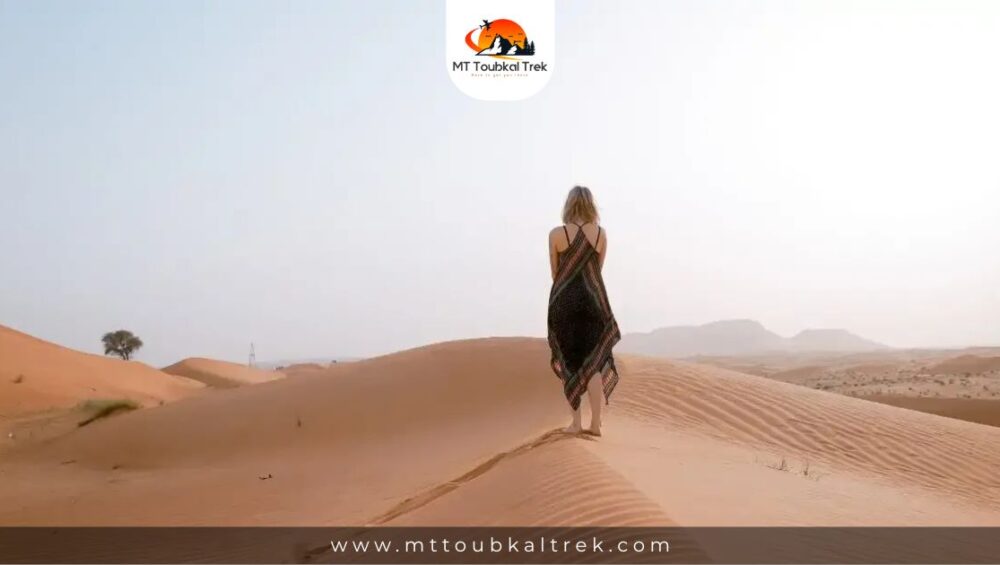
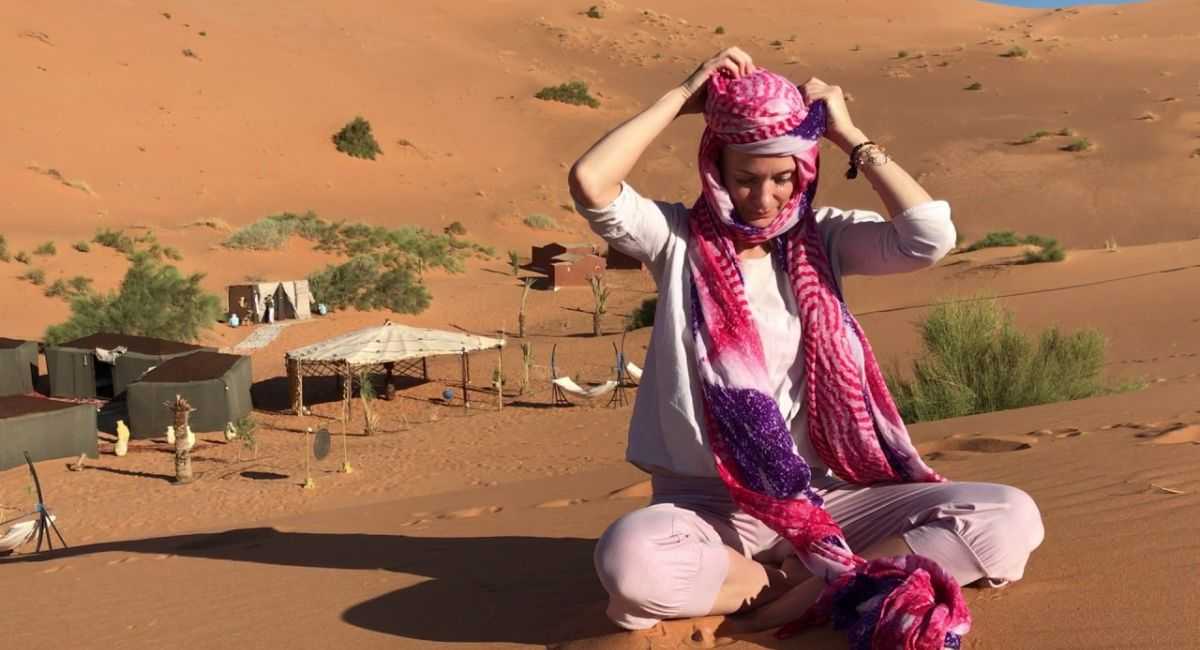
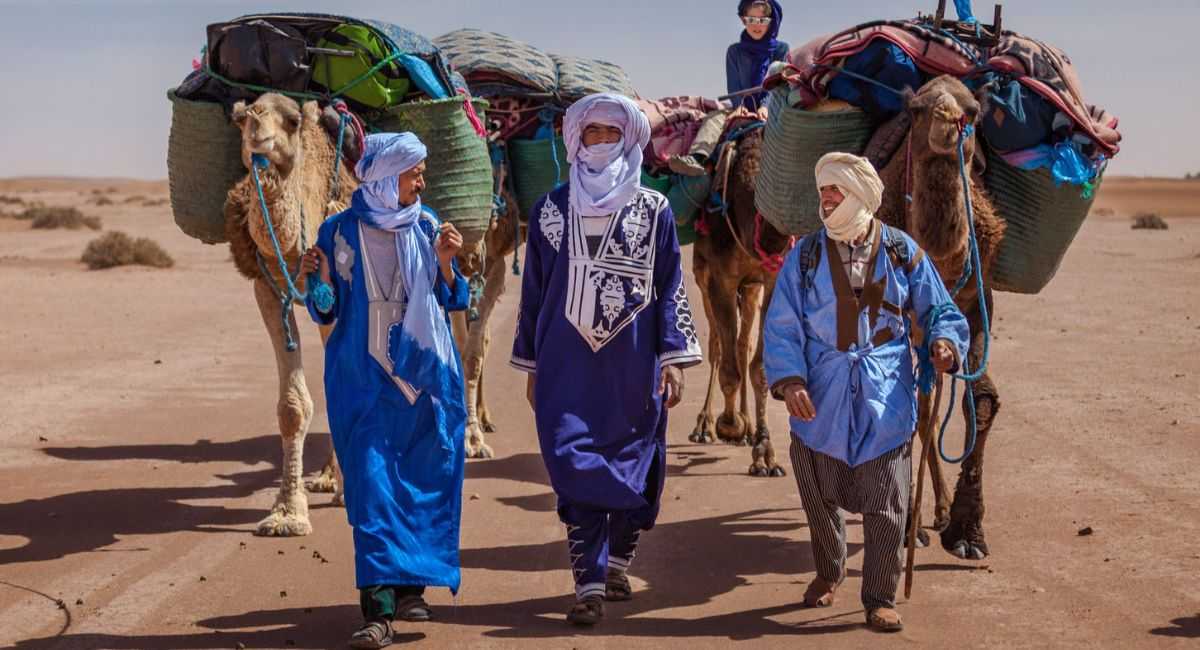
The instinct most people have is ‘desert equals hot equals shorts and t-shirts.’ That instinct is wrong on almost every count. Loose, long clothing actually keeps you cooler in direct sun than bare skin does — it blocks UV exposure, reduces moisture loss, and creates a layer of shade against your own skin. Bedouin and Berber communities have dressed this way in desert climates for centuries, and it’s genuinely the smarter approach to the environment.
Then there’s the temperature swing itself. In the Merzouga desert, a 25-30°C drop between midday and midnight isn’t unusual, especially from October through March. Visitors who pack only for the daytime heat are often genuinely caught off guard by how cold a desert night actually gets.
| “Pack for the desert you’ll be in at 3 pm, and the completely different desert you’ll be in at 3 am. Both are real.” |
Day vs Night: Two Completely Different Climates
Here’s the clothing logic broken down by time of day, since this is really the core of dressing well for the Sahara:
| Daytime
Up to 45°C in summer, 20-30°C in winter • Loose, long-sleeved shirt (linen or cotton) • Loose, breathable trousers • Wide-brim hat or scarf for head/neck • Sunglasses with UV protection • Closed shoes for dune walking • Light, neutral colours
|
Night
Near 0°C in winter, 10-15°C in summer • Insulating mid-layer (fleece or wool) • Warm outer layer (jacket, esp. Oct–Mar) • Long trousers, ideally thicker fabric • Warm socks and closed footwear • Hat or hood for warmth, not sun • Scarf doubles as a neck warmer
|
The genuinely smart approach is a layering system you can add to or strip away as the day progresses, rather than two completely separate outfits. A breathable base layer, a packable mid-layer, and a warm outer layer cover almost every scenario you’ll encounter in a single 24-hour desert cycle.
What to Wear in Sahara Desert, Head to Toe
| Head & Face |
| A scarf or keffiyeh is, without question, the single most useful piece of clothing for the Sahara. It protects against direct sun, filters out blowing sand during wind, and converts into a neck or face wrap when temperatures drop at night. A wide-brim hat is a good alternative or addition for daytime. Sunglasses with genuine UV protection are essential — desert glare off pale sand is more intense than most people expect, even on overcast days. |
| Torso |
| Long sleeves, loose fit, breathable fabric. This is the core formula. A lightweight long-sleeved shirt in linen or cotton handles daytime sun far better than a t-shirt, despite seeming counterintuitive in the heat. For evenings, a fleece or light wool jumper as a mid-layer, with a windproof or insulated jacket over the top once temperatures really drop, especially in desert camps where you’re sitting still. |
| Legs |
| Loose-fitting trousers in a breathable fabric work for both modesty and practicality — shorts leave skin exposed to both sun and sand, and they offer no protection once the temperature drops at night. Lightweight cotton or linen trousers are comfortable for daytime; if you have a slightly heavier pair for evenings, that’s worth packing too, particularly October through March. |
| Feet |
| Closed shoes with some grip are far better than sandals for dune climbing or any kind of camel trek dismount onto sand — loose sand on a slope is harder on bare feet than people expect. Sandals are fine for relaxing at camp once you’re settled for the evening. Bring proper socks too; feet get surprisingly cold once the sun goes down, even if the rest of you is layered up. |
Fabric and Colour Choices That Actually Matter
Fabric choice changes how comfortable you actually feel, not just how you look in photos. Natural fibres — cotton, linen — breathe far better than synthetic fabrics in dry heat, allowing sweat to evaporate rather than trapping it against your skin. For the cooler evening layers, wool or fleece insulates effectively even when there’s some dampness involved, which synthetic fast-dry fabrics don’t always manage as well.
Colour matters more than most people assume. Light, neutral tones — beige, off-white, pale blue — reflect heat rather than absorbing it, and they show dust and sand far less obviously than dark fabrics. Black and other dark colours genuinely feel noticeably hotter in direct desert sun; they’re fine for evening wear once the temperature drops, but not ideal as your main daytime clothing.
| Quick fabric rule: Natural fibres for daytime breath ability, wool or fleece for evening insulation, light colours for sun reflection. If you remember nothing else from this section, that combination covers most of what matters. |
Dressing for Specific Desert Activities
Camel Trekking
Loose trousers are genuinely more comfortable on a camel saddle than anything fitted or restrictive — denim in particular becomes uncomfortable quickly. A scarf is useful here too, both for sun exposure during the ride and for keeping sand out of your face if the wind picks up while you’re camel trekking into the dunes, whether on a short evening ride or a longer multi-day camel route.
Sunrise or Sunset Dune Climbing
Layer for a temperature swing within the same short outing — it can be genuinely cold at the base of the dune before sunrise and noticeably warm by the time you’re at the top with the sun fully up. Closed shoes with grip are non-negotiable here; loose sand on a steep slope is much harder to manage than it looks in photos.
Evenings at the Desert Camp
This is when your warmest layer earns its place in the bag. Sitting relatively still around a fire after sunset, especially in October through March, means the cold sets in faster than you’d expect from simply standing around during the day. Bring something properly warm, not just a light cardigan.
What to Wear in Sahara Desert by Season
Seasonal context changes the balance between your daytime and nighttime wardrobe. For a broader trip-planning context, our guide on the best time to travel in Morocco covers the full picture, but here’s what it means specifically for clothing.
| Spring — Mar to May
Lighter clothing dominates. A light jacket for evenings is usually enough. Sun protection still matters as days warm up. |
Summer — Jun to Aug
Maximum sun protection. Light, loose, long-sleeved clothing throughout the day. Evenings still benefit from a light layer. |
| Autumn — Sep to Nov
Good balance. Daytime layers similar to spring, but bring a proper warm layer for increasingly cold nights from October. |
Winter — Dec to Feb
Full layering system essential. Genuinely cold nights require a proper insulated jacket, not just a fleece. |
Cultural Considerations
Morocco’s desert communities are generally relaxed about tourist clothing, but a degree of modesty is appreciated and, practically speaking, also happens to be what works best for sun and sand protection anyway. Shoulders and knees covered is a sensible baseline in rural villages and when visiting communities like Berber settlements along desert routes.
Swimwear is fine within the private confines of a desert camp pool area if your camp has one, but it’s not appropriate for walking through villages or interacting with local communities. None of this requires anything drastically different from what’s already recommended above — the practical desert clothing and the culturally appropriate clothing turn out to be almost the same thing.
Common Clothing Mistakes
Packing only for heat. The single most common mistake. Visitors who bring nothing warmer than a t-shirt are routinely surprised by how cold desert nights actually get.
Wearing shorts and sandals for dune activities. Looks fine in photos, genuinely uncomfortable in practice — sun exposure, sand in awkward places, and difficulty climbing loose sand without proper footwear.
Choosing tight, restrictive clothing. Uncomfortable on camels, restrictive for climbing, and worse for temperature regulation than loose-fitting alternatives.
Forgetting a scarf. The most versatile single item for the desert, and the one people most often leave at home or in their main luggage instead of keeping it accessible.
KEY TAKEAWAYS
| 1 | Knowing what to wear in Sahara Desert means dressing for two climates in one day — scorching afternoons and genuinely cold nights, especially October to March. |
| 2 | Loose, long-sleeved, breathable clothing keeps you cooler than shorts and t-shirts — it blocks sun rather than just exposing skin to it. |
| 3 | A scarf or keffiyeh is the single most versatile item — sun protection, sand filter, and night-time warmth all in one. |
| 4 | Light, neutral colours and natural fabrics (cotton, linen) handle daytime heat better than dark colours and synthetics. |
| 5 | A proper insulating layer for evenings isn’t optional — desert nights drop far colder than the daytime heat would suggest. |
| 6 | Closed shoes with grip beat sandals for dune climbing and camel trekking — loose sand is harder on exposed feet than expected. |
| 7 | Practical desert clothing and culturally respectful clothing in Morocco’s desert communities are almost identical — loose and covering works for both. |
Frequently Asked Questions
Can I wear shorts and a t-shirt in the Sahara Desert?
It’s not recommended. Long, loose clothing actually keeps you cooler than bare skin by blocking direct sun and reducing moisture loss, while also protecting against sand and wind. Shorts and t-shirts also leave you exposed once temperatures drop sharply at night, and offer no protection during activities like dune climbing or camel trekking.
What should women wear in the Sahara Desert in Morocco?
Loose, long trousers or a maxi skirt with a long-sleeved top works well for both comfort and modesty in rural desert communities. A headscarf is practical for sun and sand protection regardless of cultural considerations. Swimwear is fine within camp or pool areas, but not appropriate for general wear in villages.
Is it really cold in the Sahara Desert at night?
Yes, genuinely cold, especially October through March. Desert nights can drop close to freezing even though daytime temperatures were warm or hot. A proper insulating layer — a fleece at minimum, an insulated jacket in winter — is essential, not optional, regardless of how hot the afternoon felt.
What colour clothing is best for the desert?
Light, neutral colours (beige, white, light blue) reflect heat better and show sand less than dark colours. Black and other dark shades absorb heat and become noticeably uncomfortable in direct sun, though they’re perfectly fine for cooler evening wear once temperatures drop.
Conclusion
Working out what to wear in Sahara Desert really comes down to accepting that you’re dressing for two different environments in the same 24 hours — and packing a flexible layering system rather than a single fixed outfit. Loose, breathable, light-coloured clothing handles the daytime heat far better than the shorts-and-t-shirt instinct suggests. A genuine warm layer handles the night-time cold that catches so many first-time desert visitors off guard.
None of this needs to be complicated or expensive. A few loose long-sleeved layers, breathable trousers, a proper scarf, closed shoes, and one warm layer for the evening will see you through almost any Merzouga desert trip comfortably, whatever the season. Get the clothing right, and the rest of the experience — the things to do in Merzouga, the dunes, the stars — gets to be the thing you actually remember.
If you’d like help planning the rest of your trip alongside getting your packing sorted, MT Toubkal Trek runs guided Morocco desert tours and Sahara tours from Marrakech, and can advise on exactly what to bring for your specific dates. Get in touch any time.