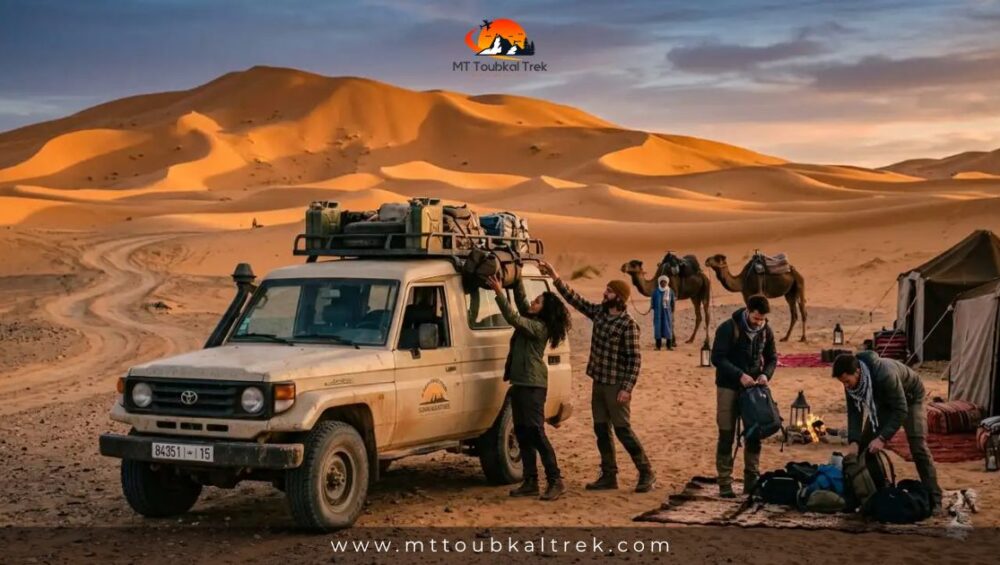
Merzouga is one of those places where a little advance knowledge makes an enormous difference to how the trip actually feels. Most of the mistakes that crop up here aren’t about bad luck — they’re about things people simply didn’t know beforehand, or chose to leave until the last minute. These Merzouga travel tips are built from the questions we get asked most often and the feedback from travellers who wish someone had told them this before they arrived.
None of what follows is meant to be alarming. Merzouga is genuinely a wonderful, safe, and accessible destination. But it does have a few quirks that catch people out repeatedly, and these Merzouga travel tips are the difference between a trip that flows and one that gets derailed by something avoidable.
| “Most desert trip problems aren’t about bad luck. They’re about things people simply didn’t know, or left until the last minute.” |
10 Common Merzouga Mistakes — and How to Avoid Them
| 1. Booking the Desert Camp Last Minute |
| The Mistake
This is by far the most common and most impactful mistake on this list. Many travellers assume they can find a camp upon arrival in Merzouga — and during shoulder season, they occasionally can. But from October through March, the better camps fill weeks in advance, and what’s left last-minute tends to be whatever nobody else wanted. It’s a particularly frustrating mistake because the consequences aren’t just minor inconvenience — the difference between a well-reviewed desert camp and a poorly-run one materially affects the quality of the overnight experience, which is often the highlight of the entire trip. The Fix Book your desert camp before you leave home, especially if visiting October to March. If you’re arranging through a Sahara tour from Marrakech, camp accommodation is usually included and pre-arranged, which removes this problem entirely. |
| 2. Packing Only for the Heat |
| The Mistake
The desert equals hot equals light clothing — this is the assumption, and it’s half right. Daytime temperatures in Merzouga can be extreme, particularly in summer. But desert nights drop dramatically once the sun sets, especially from October through March, and people who packed only for heat are genuinely unprepared by the time evening comes around. The Fix Pack a proper layering system: light, loose clothing for the day, and a genuine warm layer (fleece or light jacket) for evenings and nights. A scarf is one of the most versatile items you can bring — sun protection during the day, warmth at night. Our what to wear in the Sahara Desert guide covers this in full detail. |
| 3. Expecting the Sahara to Be All Sand Dunes |
| The Mistake
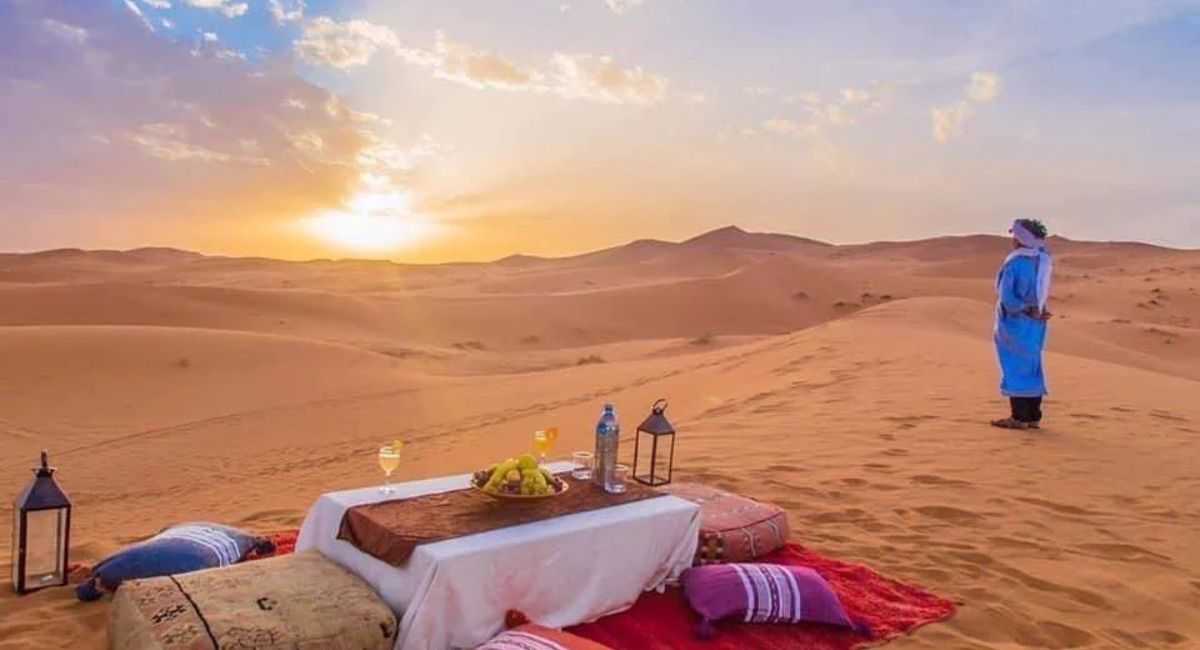
A surprising number of visitors arrive with a mental image of continuous golden sand dunes stretching to the horizon, then feel disoriented when the landscape turns out to be much more varied — rocky plains, scrub, salt flats, small oasis villages. The famous Erg Chebbi dunes are genuinely impressive, but they occupy a specific area rather than covering the entire region. The Fix Know before you go that the famous sand dunes are in a defined area of Erg Chebbi. The surrounding desert is still beautiful and atmospheric, just different from the classic dune postcard. Reading a proper Merzouga desert guide beforehand gives a realistic picture of what the landscape actually looks like. |
| 4. Underestimating How Remote Merzouga Actually Is |
| The Mistake
Merzouga is about 550 km from Marrakech — that’s an 8-10 hour drive. It feels remote because it is remote. There’s no ATM in Merzouga itself (the nearest is around 20 km away in Rissani), mobile signal is patchy, and the nearest hospital is a significant distance away. People who arrive unprepared for this level of remoteness can find it stressful. The Fix Withdraw cash in Marrakech or Ouarzazate before heading deeper south. Download offline maps. Tell your camp what time you’re expecting to arrive. And if you’re arriving independently rather than on an organised Morocco desert tour, have a basic plan in place for what you’ll do if the car breaks down or you arrive much later than planned. |
| 5. Visiting in the Peak Summer Heat |
| The Mistake
Summer in Merzouga is brutal — daytime temperatures frequently exceed 45°C, and some days push higher still. This isn’t a ‘hot but manageable’ situation; it’s genuinely dangerous heat that restricts outdoor activity to very early morning and restricts even those who adapt well. Most of the activities that make Merzouga special — camel treks, dune climbing, stargazing walks — become either unpleasant or hazardous in midsummer heat. The Fix If you have flexibility, visit between October and April. October to early December is the sweet spot — comfortable temperatures, fewer crowds, and some of the most beautiful light of the year on the dunes. If summer is your only option, plan everything for before 8 am or after sunset, stay out of the sun during midday hours, and hydrate aggressively. Our guide on the best time to travel in Morocco covers the full seasonal breakdown. Timing is one of the most impactful Merzouga travel tips on this entire list. |
| 6. Treating the Long Drive as Just a Means of Transport |
| The Mistake
The drive from Marrakech to Merzouga takes 8-10 hours and passes through some of the most dramatic landscapes in Morocco — the High Atlas mountains via the Tizi n’Tichka pass, the fortified kasbah of Ksar Ait Ben Haddou, and the palm-lined Draa Valley. Travellers who book economy bus tickets or opt for the fastest route possible miss what many people consider the best part of the entire trip. The Fix Treat the journey as part of the experience. Book a private driver or join an organised 3-day Marrakech to Merzouga tour that builds meaningful stops into the route. The Ksar Ait Ben Haddou stop alone is worth building the itinerary around. |
| 7. Only Spending One Night in the Desert |
| The Mistake
One night is the minimum to experience the desert properly, and it’s significantly better than not going at all. But many travellers who do only one night come away wishing they had stayed longer. One night gives you a sunset, a night, and a sunrise — genuinely wonderful. What it doesn’t give you is the second morning when the camp is quieter, the slower daylight hours when you can actually explore the dunes on foot, or a proper second night of stargazing. The Fix If the itinerary allows any flexibility at all, build in two nights rather than one. The difference in how settled and absorbed you feel is disproportionate to the extra day spent there. Read more on the full range of things to do in Merzouga to understand why a second day justifies itself easily. |
| 8. Skipping the Camel Trek to Save Time or Money |
| The Mistake
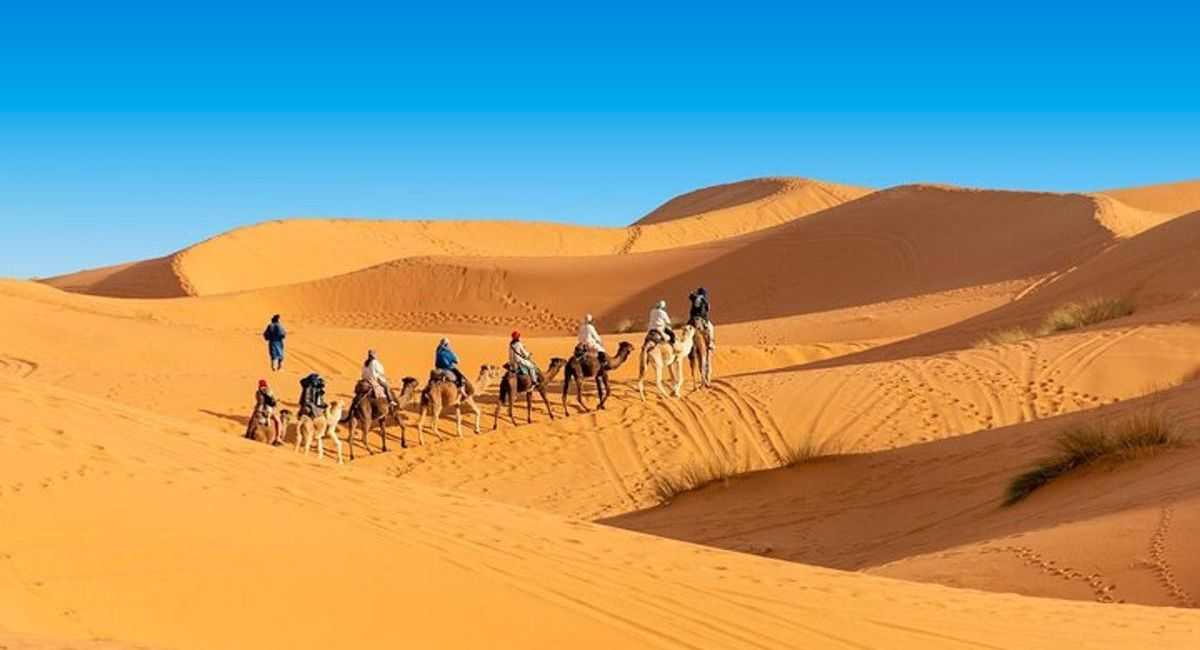
Some visitors try to trim the itinerary or budget by skipping the camel trek and driving directly to the camp by 4×4 instead. This is a reasonable, practical option, but it genuinely misses something. The camel trek is not just a novelty — the pace, the angle, and the gradual immersion into the dunes as the light changes is a qualitatively different experience from being driven there in fifteen minutes. The Fix Do the camel trek, even if it’s just the standard one-hour ride to camp. It’s one of the most distinctive elements of the entire Morocco trip for most travellers, and the camel riding experience in Morocco is something genuinely hard to replicate anywhere else in the world. |
| 9. Not Exploring Beyond the Dunes |
| The Mistake
Merzouga isn’t just Erg Chebbi. The surrounding area has genuine cultural and geological depth that most visitors miss entirely because they spend all their time in or around the main dune field. The village of Khamlia, about 7 km from Merzouga, hosts one of the region’s most distinctive traditions — Gnawa music, performed by a community of sub-Saharan African descent. The fossil sites near Erfoud are among the richest in Morocco. Salt lakes at Dayet Srji sometimes attract flamingos. The Fix Ask your camp or guide about the options beyond the dunes, or book a 4×4 excursion that specifically includes a stop at Khamlia village. It genuinely rounds out the trip in a way that pure dune time alone doesn’t provide. |
| 10. Going Without Any Local Knowledge or Guidance |
| The Mistake
Merzouga is accessible and well-touristed enough that arriving independently is completely feasible. But going without any local knowledge — no guide, no recommended camp, no contacts in the area — significantly increases the chance of things going wrong, from being overcharged at the camp gate to missing the best dune positions for sunrise because nobody told you where to go. The local knowledge advantage here isn’t about hand-holding. It’s about specifics that only come from people who know the desert well: which section of the dunes catches the best morning light, which camps are genuinely worth the premium versus which are trading on old reputation, which activities are worth doing, and which are tourist traps. The Fix Travel with an operator who knows the area, or at a minimum, do serious research before arriving. MT Toubkal Trek has been running Morocco desert tours through Merzouga for years. Acting on good Merzouga travel tips from people with firsthand knowledge is exactly the difference between a trip that exceeds expectations and one that’s merely fine. |
KEY TAKEAWAYS
| 1 | These Merzouga travel tips cover the 10 most common and most avoidable mistakes — from booking camps last minute to visiting in summer heat. |
| 2 | Book your desert camp in advance, especially October to March, when quality camps fill up weeks ahead of arrival. |
| 3 | Pack a proper warm layer — desert nights in Merzouga drop dramatically once the sun sets, even when days were intensely hot. |
| 4 | Withdraw cash before leaving Marrakech or Ouarzazate. The nearest ATM to Merzouga is around 20 km away in Rissani. |
| 5 | Visit from October to April for the best experience. Summer (June–August) temperatures regularly exceed 45°C, restricting most outdoor activities. |
| 6 | Treat the drive from Marrakech as part of the experience — the High Atlas, Ksar Ait Ben Haddou, and the Draa Valley are highlights in their own right. |
| 7 | Two nights in Merzouga is significantly better than one. The extra night gives time to slow down and actually absorb the desert rather than just tick the boxes. |
Frequently Asked Questions
What is the most important Merzouga travel tip?
Book your desert camp in advance. This is the single most impactful Merzouga travel tip on any list, and the one that causes the most regret when skipped. The difference between a well-reviewed camp booked weeks ahead and a last-minute option found on arrival can be substantial, and it directly affects the quality of what is often the highlight of the entire trip.
Is it safe to visit Merzouga alone?
Yes, Merzouga is a safe and well-established tourist destination. Standard precautions apply — tell your camp where you’re going if you’re exploring independently, don’t venture deep into the dunes alone without informing someone, and carry water. The main practical risks are environmental — dehydration and sun exposure — rather than anything related to safety in the conventional sense.
Do I need cash in Merzouga?
Yes. There is no ATM in Merzouga itself, and while some camps and operators accept cards, cash is more reliable for tips, small purchases, and any incidental costs along the way. Withdraw in Marrakech or Ouarzazate before heading south — this is one of the more commonly cited Merzouga travel tips that people wish they’d followed.
How many days should I spend in Merzouga?
Two nights is the recommended minimum. One night gives you the sunset, the stargazing, and the sunrise — genuinely wonderful. Two nights gives you time to explore the dunes more freely, try additional activities like sandboarding or a 4×4 excursion, and actually settle into the rhythm of the desert rather than feeling rushed from the moment you arrive.
Conclusion
Good Merzouga travel tips aren’t complicated — they mostly come down to booking early, packing for both extremes of temperature, timing your visit correctly, and treating the journey to the desert as part of the trip rather than just a means of getting there. None of the mistakes on this list require anything exotic to avoid. They just require knowing about them beforehand, which is the whole point of a guide like this one.
Merzouga itself is extraordinary — the kind of place that tends to exceed expectations when visited with the right preparation and enough time. The camel trekking, the silence, the stars, the sunrise light on the dunes — none of that needs any help being remarkable. But a poorly booked camp, an unexpected cold night, or a drive that felt like something to get through rather than part of the experience can take the edge off something genuinely special. These tips exist to make sure none of that happens.
If you’d like help putting this together from the ground up — with camps vetted, timing sorted, and the route built around your specific dates — MT Toubkal Trek runs guided Morocco desert tours and can handle the logistics so you can focus on the part that actually matters. Get in touch any time.